
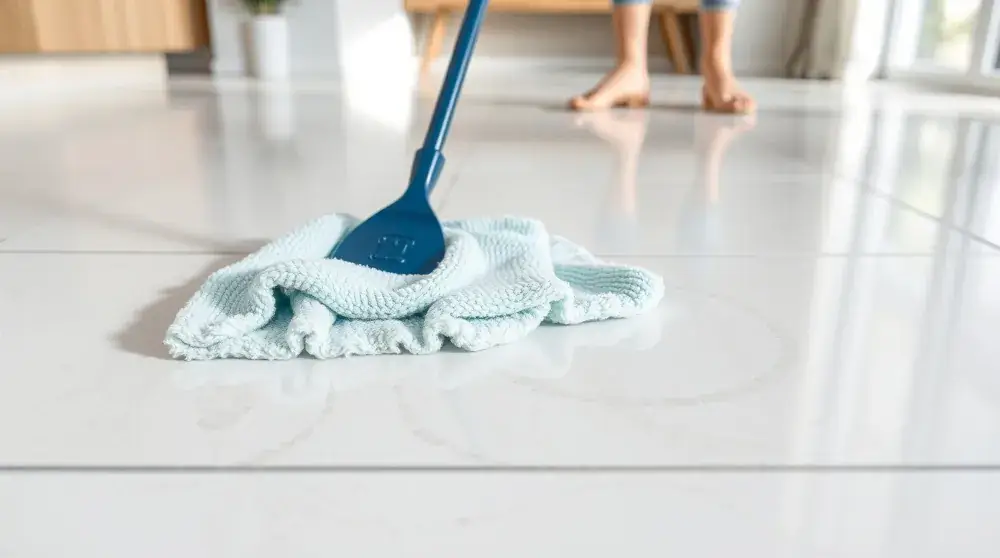
Few things are more frustrating than floors that feel sticky after cleaning. You mop, wait for them to dry, and instead of feeling smooth and fresh, the surface feels tacky under your feet. Add dark scuff marks along walkways or near furniture, and suddenly your clean floors look worn and neglected.
If this sounds familiar, you’re not doing something “wrong” — you’re just dealing with very common floor-cleaning mistakes that almost every household makes at some point.
This guide will show you exactly how to fix sticky floors and remove scuff marks safely, without damaging tile, hardwood, laminate, or vinyl. More importantly, you’ll learn why these problems happen and how to prevent them from coming back.
This article is part of our ultimate floor and carpet cleaning guide, where we cover every major floor type and cleaning method in detail.
Why Floors Feel Sticky After Cleaning
Sticky floors are rarely caused by dirt alone. In most cases, they are caused by residue — a thin layer of product or grime that remains on the surface after cleaning.
Too Much Cleaning Product
Using more cleaner does not mean cleaner floors. Excess detergent dries on the surface and creates a tacky film that attracts dust and makes floors feel sticky. This is the number one cause of sticky tile and vinyl floors.
Dirty Mop Water
When mop water is not changed frequently, dirt and soap residue are spread back across the floor. Instead of being removed, contaminants are redistributed in a thin layer.
Grease and Cooking Residue
Kitchen floors collect invisible oil particles from cooking. These oils bind with soap residue, creating a sticky feeling even after mopping.
Wrong Cleaner for the Floor Type
Some products that work well on tile can leave residue on hardwood or laminate. Using multi-purpose cleaners without checking floor compatibility is a common mistake.
What Are Scuff Marks and Why Do They Appear?
Scuff marks are dark streaks or smudges caused by friction. They are not stains — they are surface marks created when rubber, plastic, or hard materials rub against the floor.
Common Sources of Scuff Marks
- Rubber-soled shoes
- Furniture legs without pads
- Vacuum wheels
- Children’s toys
- Heavy foot traffic areas
Scuff marks are especially visible on glossy tile, hardwood, and laminate floors, particularly near entryways and hallways.
How to Fix Sticky Floors (General Method)
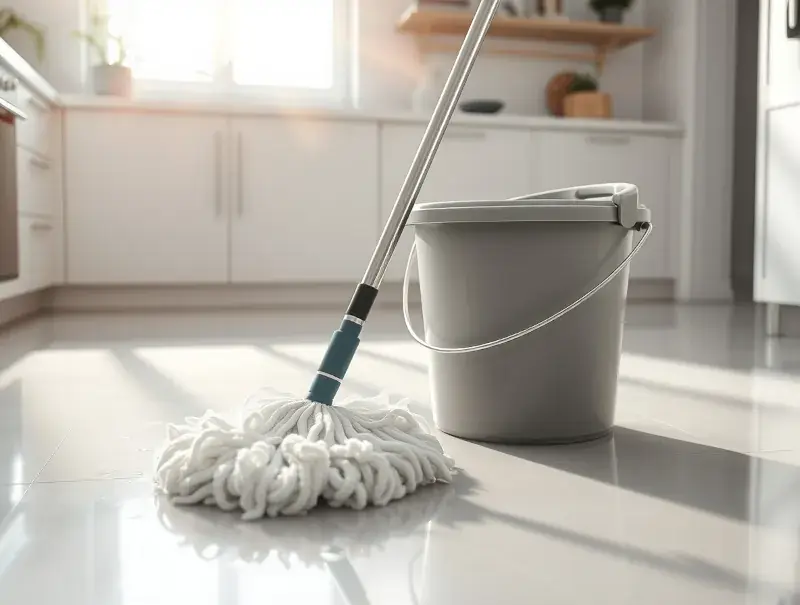
Before targeting specific floor types, start with this universal residue-removal approach. It solves most sticky-floor problems.
Step 1: Dry Clean First
Vacuum or sweep thoroughly to remove dust and grit. This prevents spreading debris during wet cleaning.
Step 2: Break Down Residue
Mix warm water with a very small amount of dish soap (about half a teaspoon per bucket). Dish soap is designed to cut grease and residue, making it ideal for this step.
Lightly mop the floor using a microfiber mop. Do not soak the surface.
Step 3: Rinse with Clean Water
Rinse the mop and go over the floor again using plain clean water. This step is crucial for removing loosened residue.
Step 4: Let the Floor Dry Completely
Air-dry the floor or speed up drying with a fan. If any tacky areas remain, repeat the rinse step.
This method works for tile, vinyl, and sealed hard floors. Hardwood and laminate require additional care, which we’ll cover below.
How to Fix Sticky Tile Floors
Tile floors are the most forgiving, but they also show residue easily.
Use Minimal Cleaner Going Forward
After removing residue, reduce the amount of cleaning product you use by at least half. Most tile floors only need a small amount of pH-neutral cleaner.
Address Grout Buildup
Dirty grout can contribute to a sticky feeling. Use baking soda paste on grout lines and scrub gently with a soft brush, then rinse thoroughly.
For a full tile-care routine, see How to Clean Tile Floors.
How to Fix Sticky Hardwood Floors
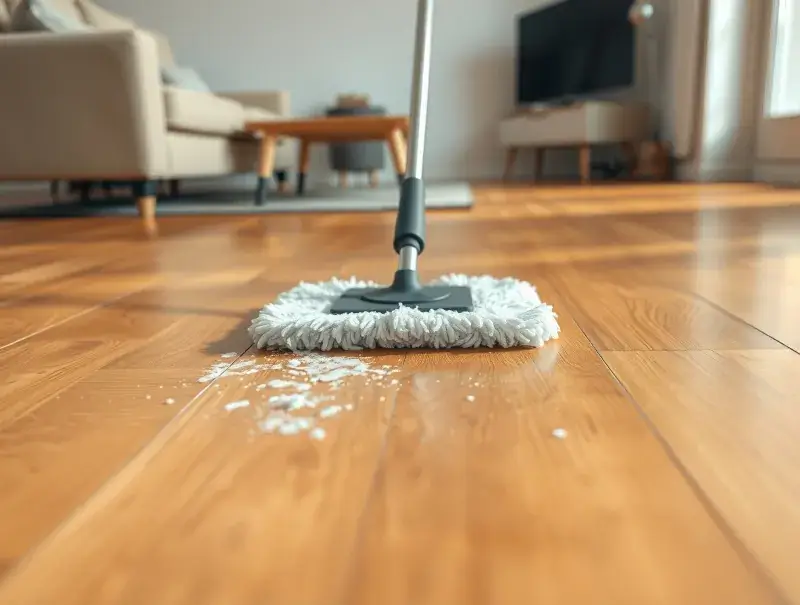
Hardwood requires caution. Never flood hardwood with water.
Use a Hardwood-Specific Cleaner
Apply a pH-neutral hardwood cleaner using a barely damp microfiber mop. Avoid vinegar or ammonia unless the manufacturer explicitly allows it.
Remove Product Buildup
Sticky hardwood is often caused by polish or soap buildup. Clean the surface gently and dry immediately.
For proper maintenance methods, follow the best way to clean hardwood floors to protect the finish.
How to Fix Sticky Laminate Floors
Laminate floors become sticky quickly when over-wet or cleaned with the wrong products.
Switch to a Spray Mop
Spray mops control moisture and prevent water from seeping into seams.
Avoid Polishes and Wax
Laminate should never be waxed or polished. These products leave residue that causes stickiness and dullness.
Follow these laminate floor cleaning tips to prevent future issues.
How to Remove Scuff Marks from Floors
Scuff marks are surface-level and usually easy to remove with the right technique.
Method 1: Microfiber Cloth and Mild Cleaner
Dampen a microfiber cloth with warm water and a drop of mild cleaner. Rub gently over the scuff until it lifts.
Method 2: Magic Eraser (Use Gently)
Magic erasers work well on tile and vinyl. Use very light pressure, especially on hardwood, to avoid dulling the finish.
Method 3: Baking Soda Paste (Tile Only)
Mix baking soda with water and rub gently on the scuff using a soft cloth. Rinse afterward.
Method 4: Tennis Ball Trick
Rubbing a clean tennis ball over scuff marks works surprisingly well on hard floors.
Removing Scuff Marks by Floor Type
Tile Floors
Tile handles mild abrasion well. Baking soda paste or a magic eraser works safely on most ceramic and porcelain tiles.
Hardwood Floors
Avoid abrasive methods. Use a microfiber cloth and hardwood-safe cleaner. Always test in a hidden area first.
Laminate Floors
Use minimal moisture and gentle pressure. Never scrub aggressively.
Vinyl Floors
Vinyl tolerates magic erasers well but avoid harsh chemicals that can strip the protective layer.
Common Mistakes That Make Sticky Floors Worse
Using More Cleaner to Fix the Problem
This only adds more residue and increases stickiness.
Skipping the Rinse Step
Rinsing removes loosened residue. Skipping it leaves residue behind.
Mixing Cleaning Products
Combining cleaners can create films that are difficult to remove.
Using Old Mop Heads
Dirty mop heads reintroduce residue and bacteria.
How to Prevent Sticky Floors and Scuff Marks
Prevention is easier than fixing problems later.
Use the Two-Bucket Mopping Method
One bucket for cleaning solution, one for rinsing keeps floors residue-free.
Change Mop Water Often
Fresh water makes a noticeable difference in results.
Use Furniture Pads
Felt pads prevent scuff marks and protect finishes.
Clean Spills Immediately
Sugary or oily spills become sticky if left too long.
Choose the Right Tool
Not sure which mop is best? Our mop vs steam mop comparison explains which tool works for each floor type.
When Sticky Floors Signal a Bigger Issue
If floors stay sticky despite proper cleaning, the issue may be:
- Worn floor finish
- Unsealed grout
- Old polish buildup
- Moisture damage
In these cases, professional cleaning or refinishing may be needed.
Final Takeaway
Sticky floors and scuff marks are not signs of neglect — they are signs of product misuse, residue buildup, or friction. Once you understand the cause, fixing the problem becomes simple.
By using minimal cleaner, rinsing properly, choosing the right tools, and following floor-specific methods, you can restore smooth, clean floors and keep them that way.
For a complete system covering every surface in your home, explore our floor and carpet cleaning guide, where each cluster article connects into a clear, easy-to-follow cleaning routine.