
Laminate floors are popular for a reason. They offer the look of hardwood at a more affordable price, resist scratches better than many natural materials, and are relatively easy to maintain. However, laminate is also one of the easiest floors to damage when cleaned incorrectly.
Many laminate floor problems—swelling, bubbling, dullness, or persistent streaks—are caused by too much water, the wrong tools, or cleaners that leave residue behind. If your laminate floors never seem to look quite right after cleaning, the issue is usually not dirt. It’s technique.
This guide shares practical, proven laminate floor cleaning tips that keep floors clean without warping boards or dulling the surface. You’ll learn how laminate flooring reacts to moisture, what tools and cleaners are safe, and how to build a routine that protects your floors long term.
This article is part of our ultimate floor and carpet cleaning guide, where all floor types are connected into one complete home-care system.
Understanding Laminate Floors and How They Differ From Wood
Before choosing a cleaning method, it’s important to understand how laminate floors are constructed. Laminate is not solid wood. It is made from compressed fiberboard with a photographic wood layer and a protective wear coating on top.
This structure makes laminate more resistant to scratches but far more vulnerable to moisture. When water seeps into seams, the fiberboard core can swell, causing boards to lift or bubble. Unlike hardwood, laminate cannot be sanded or refinished once damaged.
Because of this, laminate cleaning must focus on minimal moisture and residue control above all else.
Why Laminate Floors Get Streaky, Dull, or Damaged

Most laminate floor issues come from three common causes.
Excess Moisture
Over-wet mopping, standing water, and steam mops force moisture into seams. Even small amounts of repeated moisture exposure can lead to swelling or edge damage over time.
Product Buildup
Soap-based cleaners, floor polishes, and multi-purpose sprays often leave a film behind. This residue attracts dust and causes streaks, dull patches, or sticky areas.
Abrasive Tools and Grit
Dirt and grit act like sandpaper. Without regular dry cleaning, everyday foot traffic slowly wears down the protective layer, making floors look cloudy and worn.
Understanding these causes helps you prevent most laminate problems entirely.
The Best Tools for Cleaning Laminate Floors
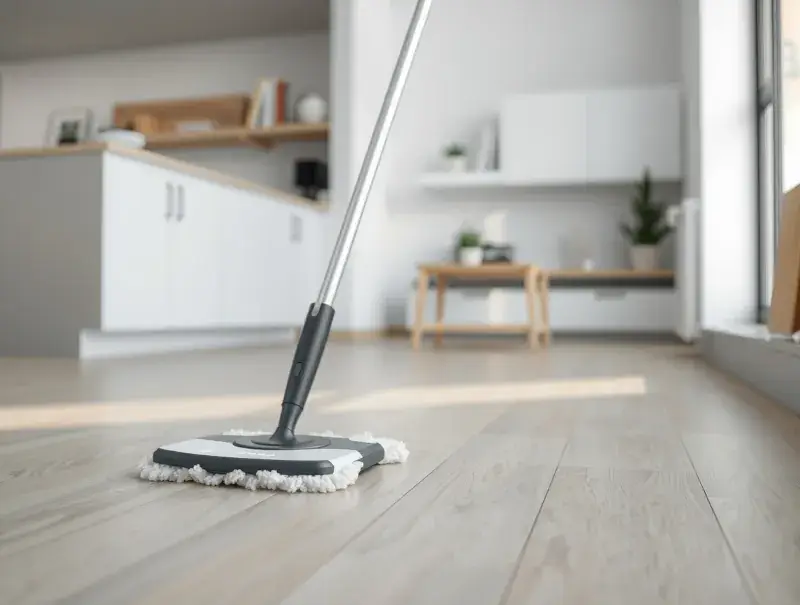
Using the right tools is essential for keeping laminate floors in good condition.
Microfiber Mop
A microfiber mop is the safest and most effective tool for laminate. It lifts dust and residue using very little moisture and leaves fewer streaks than traditional mops.
Spray Mop for Controlled Moisture
Spray mops are ideal for laminate because they apply a controlled amount of cleaner. This prevents water from pooling or seeping into seams.
Vacuum Cleaner With Hard-Floor Attachment
Vacuuming removes fine grit that can scratch the surface during mopping. Always use a hard-floor or soft-brush attachment.
Tools to Avoid
Avoid string mops, sponge mops, abrasive scrub pads, and steam mops. These tools introduce excess moisture or friction and can permanently damage laminate flooring.
For tool comparisons, see Mop vs Steam Mop.
Choosing the Right Cleaner for Laminate Floors
The wrong cleaner can ruin laminate faster than dirt ever will.
Use Laminate-Specific or pH-Neutral Cleaners
Laminate-safe cleaners are designed to clean without leaving residue or damaging the wear layer. pH-neutral cleaners are generally safe if they are labeled for laminate use.
Avoid Vinegar, Ammonia, and Acidic Cleaners
Although vinegar is often recommended online, it can dull laminate’s protective coating over time and leave floors streaky.
Avoid Polishes, Wax, and Oil Soaps
Laminate floors should never be polished or waxed. These products leave buildup that causes dullness and slippery surfaces.
Daily and Weekly Laminate Floor Cleaning Routine
Consistency matters more than intensity when cleaning laminate.
Daily or Frequent Dry Cleaning
Dry clean high-traffic areas using a microfiber mop or vacuum. Focus on entryways, kitchens, and hallways where dirt accumulates quickly.
This step prevents scratches and reduces the need for wet cleaning.
Weekly Light Cleaning
Once a week, lightly clean the floor using a spray mop and laminate-safe cleaner. Spray the cleaner directly onto the mop pad rather than the floor.
Work in small sections and allow floors to air-dry quickly.
How to Deep Clean Laminate Floors Safely
Deep cleaning laminate is about removing residue—not adding moisture.
Step 1: Remove Loose Dirt
Vacuum thoroughly to eliminate grit that could scratch the surface.
Step 2: Spot Clean Problem Areas
For sticky spots or buildup, lightly dampen a microfiber cloth with laminate-safe cleaner and wipe gently.
Step 3: Dry Immediately
Never leave moisture behind. Dry the area with a clean microfiber cloth if needed.
Deep cleaning should be done only when necessary, not on a fixed schedule.
What NOT to Use on Laminate Floors
Avoiding certain products is just as important as using the right ones.
Steam Mops
Steam mops force vapor into seams and can cause bubbling, lifting, or permanent damage.
Excess Water
Flooding the floor or using overly wet mops leads to swelling and seam damage.
Abrasive Pads and Brushes
Abrasives scratch the wear layer and expose the decorative layer underneath.
Soap-Based Cleaners
Soap leaves residue that causes streaks and stickiness.
How to Fix Sticky or Streaky Laminate Floors
Sticky laminate floors are usually caused by product residue.
Use a laminate-safe cleaner and a lightly damp microfiber mop to remove buildup. Avoid adding more product to fix the issue.
For detailed steps, see How to Fix Sticky Floors & Remove Scuff Marks.
Cleaning Laminate Floors by Room
Different rooms create different cleaning challenges.
Kitchens
Grease and spills are common. Dry clean frequently and spot clean spills immediately to prevent residue buildup.
Living Rooms
Foot traffic causes wear. Use rugs in high-traffic areas and vacuum regularly.
Hallways and Entryways
These areas collect grit from outside. Daily dry cleaning helps prevent surface wear.
Bedrooms
Bedrooms require less frequent cleaning but still benefit from regular dust removal.
Laminate Floor Care for Homes With Pets and Kids
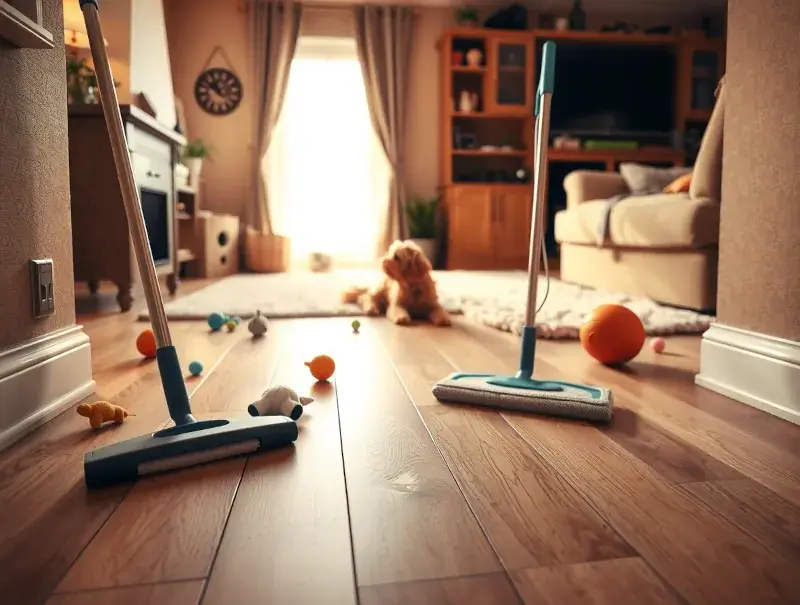
Laminate is generally pet-friendly, but grit and accidents require quick attention.
Vacuum frequently to remove pet hair and debris. Clean spills immediately to prevent moisture damage. Trim pet nails and use mats or rugs in play areas.
Choose non-toxic, laminate-safe cleaners for family spaces.
How to Protect Laminate Floors Long Term
Cleaning alone will not protect laminate floors.
Use entryway mats to reduce dirt, add felt pads under furniture, avoid dragging heavy objects, and clean spills immediately. These habits significantly extend the life of laminate flooring.
When Laminate Floor Damage Cannot Be Fixed
Unlike hardwood, laminate cannot be refinished. If boards swell, bubble, or peel, replacement may be the only option. Preventive care is far easier than repair.
Final Takeaway
Laminate floors stay beautiful when cleaned lightly, quickly, and consistently. Minimal moisture, the right tools, and residue-free cleaners protect the surface and prevent common problems.
When you understand how laminate flooring behaves, maintenance becomes simple and stress-free.
For a complete home system covering every floor type, visit our ultimate floor and carpet cleaning guide, where all cleaning methods connect into one practical routine.