
Microwave odors can be surprisingly stubborn. Even after wiping away visible messes, smells from fish, popcorn, curry, or burnt food often linger inside the appliance. Because the microwave is an enclosed space, odors easily cling to interior walls, vents, and door seals.
Many people reach for chemical sprays to fix the problem, but strong cleaners can leave behind fumes and residue—exactly where food is reheated. The better solution is to remove odors naturally, using simple ingredients that neutralize smells instead of masking them.
This guide explains how to remove microwave odor naturally using safe, proven methods. You’ll learn why odors linger, which natural solutions work best, and how to prevent smells from coming back.
Why Microwave Odors Linger So Easily
Understanding the source of odors helps you remove them more effectively.
Odors Get Trapped in Enclosed Spaces
Microwaves are sealed environments. Steam, grease, and food vapors rise during heating and settle on interior surfaces. Once cooled, these particles stick and slowly release odor over time.
Grease and Food Residue Absorb Smells
Even thin layers of grease absorb strong food aromas. If residue isn’t fully removed, odors return every time the microwave heats up.
Vents and Door Seals Hold Hidden Odors
Most people clean only the interior walls and turntable. Vents, corners, and rubber door seals often trap odors and are easily overlooked.
Removing microwave odor requires addressing all these areas—not just the visible mess.
Best Natural Ways to Remove Microwave Odor
Different odors require different approaches. These natural methods work by neutralizing smells rather than covering them up.
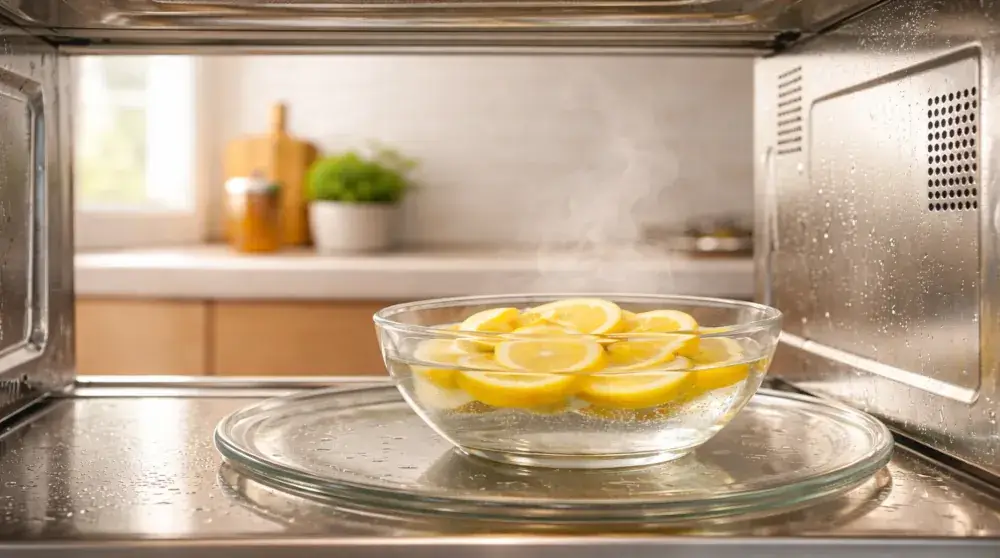
Lemon Steam Method (Fresh and Effective)
Lemon is one of the most effective natural deodorizer for microwaves.
When heated, lemon releases steam and citric acid. The steam loosens residue while the citrus neutralizes odors and leaves a fresh scent behind.
This method works best for:
- Everyday food smells
- Mild burnt odors
- General freshness
For a complete walkthrough, see How to Clean Microwave with Lemon (Fast, Natural & Effective Method).
Vinegar Steam Method (Strong Odor Removal)
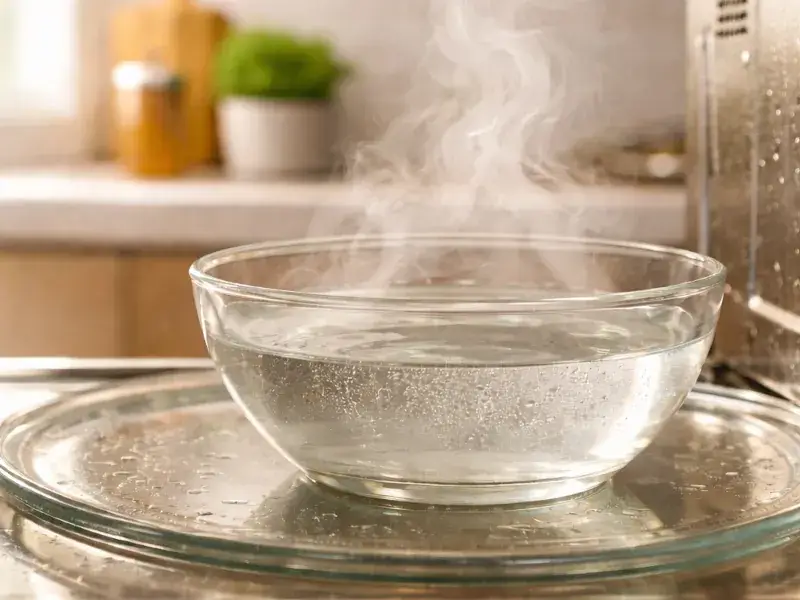
Vinegar is ideal for strong, lingering smells.
Its acidity breaks down odor-causing particles effectively, especially after cooking fish or spicy foods. The smell of vinegar disappears once the microwave dries.
Use this method when:
- Odors are strong or persistent
- Lemon is not available
- You need deeper deodorizing
Baking Soda Odor Absorption
Baking soda absorbs odors rather than neutralizing them chemically.
Place an open bowl of baking soda inside the microwave overnight to pull lingering smells from the air and interior surfaces. This method works best as a follow-up after cleaning.
Coffee Grounds for Odor Absorption
Dry coffee grounds absorb odors effectively and leave a mild coffee scent. Place a small bowl inside the microwave overnight to neutralize lingering smells.
This is especially helpful after burnt food incidents.
Step-by-Step: How to Remove Microwave Odor Naturally
For best results, follow this simple process.
What You’ll Need
- Lemon, vinegar, baking soda, or coffee grounds
- Microwave-safe bowl
- Water
- Microfiber cloth
Odor Removal Steps
- Steam clean the microwave using lemon or vinegar
- Let steam sit with the door closed for several minutes
- Wipe all interior surfaces thoroughly
- Clean the turntable separately
- Wipe door seals and corners
- Leave the door open to air dry
- Place baking soda or coffee grounds inside overnight if needed
This layered approach removes both surface residue and trapped odors.
How to Remove Burnt Microwave Smell Naturally
Burnt smells require extra patience.
Repeat Steam Cleaning
Burnt odors often require two rounds of steam cleaning. Lemon works well for mild burns, while vinegar is better for stronger smells.
Absorb Odors Overnight
After steam cleaning, place baking soda or coffee grounds inside overnight to absorb remaining odors.
Improve Ventilation
Leave the microwave door open when not in use and ensure the kitchen is well ventilated to prevent odor buildup.
Common Mistakes When Removing Microwave Odor
Some habits make odors worse instead of better.
One mistake is masking odors with sprays instead of removing residue. Another is skipping vents and door seals, where smells often hide.
Avoid mixing baking soda_toggle and vinegar together. When combined, they cancel each other out and reduce effectiveness.
Also, don’t rush drying. Moisture left inside encourages odor-causing bacteria.
How to Prevent Microwave Odors from Coming Back
Prevention is easier than repeated odor removal.
Cover Food When Heating
Using microwave-safe covers prevents splatters and vapor buildup.
Wipe Spills Immediately
Fresh spills are much easier to remove and won’t absorb odors.
Clean Regularly
Light weekly cleaning prevents odor buildup and reduces the need for deep deodorizing.
Use Natural Deodorizers Periodically
Leaving baking soda inside overnight once a month helps keep odors from returning.
How Often Should You Deodorize Your Microwave?
For daily use:
- Light wipe weekly
- Steam clean every 1–2 weeks
- Deodorize monthly
For light use:
- Clean as needed
- Deodorize when odors appear
Consistency matters more than intensity.
Is Natural Odor Removal Really Enough?
Yes—for normal household use.
Natural methods remove odors by breaking down residue and absorbing lingering smells. Severe neglect may require repeating steps, but chemical sprays are rarely necessary.
Natural deodorizing is safer, more sustainable, and effective when used consistently.
Related Microwave Cleaning Guides
These guides work together to keep your microwave clean and odor-free naturally.
- How to Clean Microwave with Lemon (Fast, Natural & Effective Method)
- How to Clean Microwave Without Chemicals (Safe Natural Methods)
- Best Natural Microwave Cleaning Hacks
- Common Microwave Cleaning Mistakes
Final Takeaway
Microwave odors don’t need harsh chemicals to disappear. With lemon, vinegar, baking soda, and proper steam cleaning, you can remove smells safely and effectively.
Clean residue first, absorb lingering odors second, and maintain regularly. With this approach, your microwave stays fresh—naturally.