
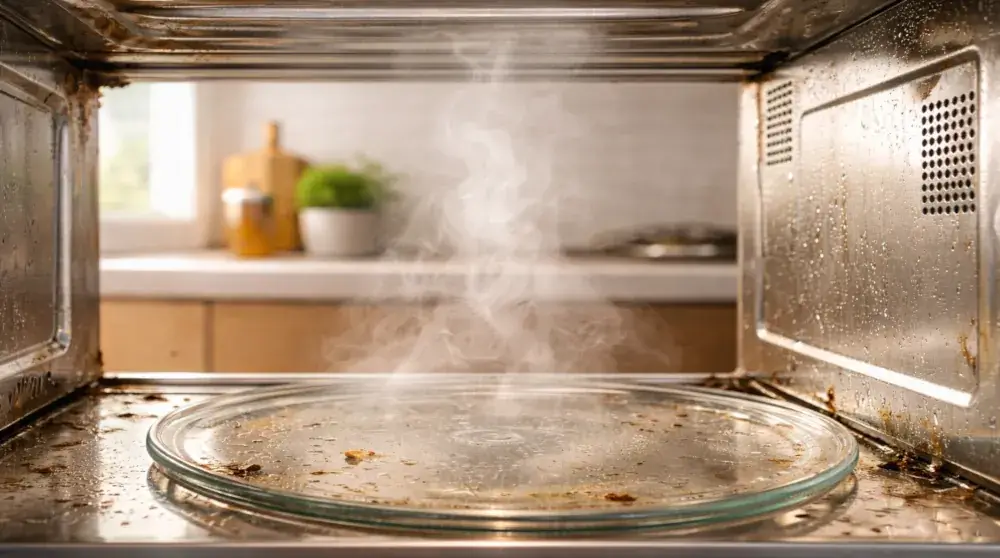
Cleaning a microwave seems simple—wipe the inside, spray a cleaner, and you’re done. Yet many people notice something frustrating: the microwave still smells bad, or even worse, the odor becomes stronger after cleaning.
This usually isn’t because the microwave is “too dirty.” It’s because of microwave cleaning mistakes that trap odors, spread residue, or create new smells altogether.
In this guide, you’ll learn the most common microwave cleaning mistakes to avoid, why they cause odor problems, and what to do instead. Fixing these habits will not only remove smells faster but also keep them from coming back.
This article supports our complete natural microwave cleaning system, where the right methods work together instead of against each other.
Why Cleaning the Microwave Can Make Odors Worse
Microwaves are enclosed spaces. Heat, steam, and food vapors circulate and settle into every corner. When cleaning is done incorrectly, odors don’t disappear—they get redistributed.
Some methods spread grease instead of removing it. Others mask smells temporarily, only for them to return once the microwave heats up again. In some cases, moisture trapped after cleaning actually feeds odor-causing bacteria.
Understanding these patterns makes it much easier to avoid them.
Using Chemical Sprays Inside the Microwave
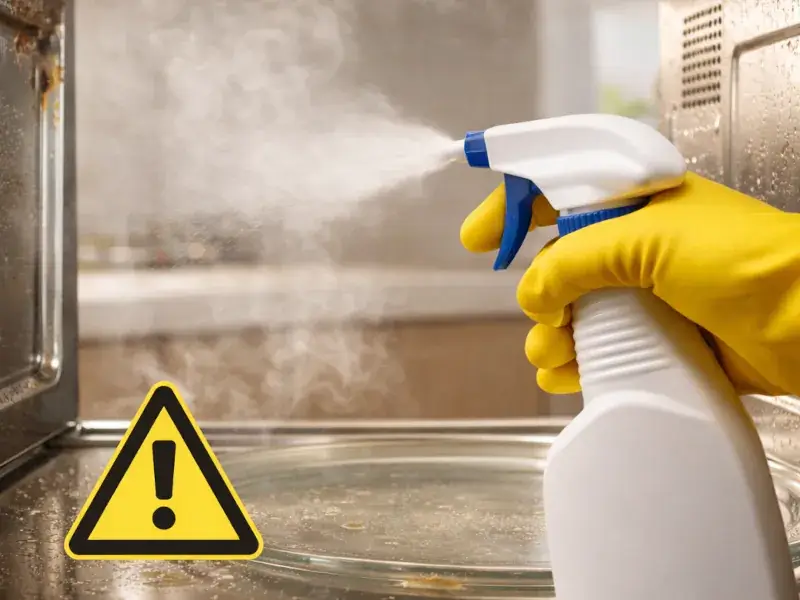
One of the most common microwave cleaning errors is relying on strong chemical sprays.
Why This Causes Odor Problems
Chemical cleaners often leave residue behind, especially if they are not wiped thoroughly. When the microwave heats up, these residues release fumes that mix with food odors, creating an unpleasant smell.
In an enclosed appliance, those fumes linger longer than expected.
What to Do Instead
Use natural steam-based methods that break down residue rather than coating surfaces. Lemon, vinegar, or warm water steam loosens grime so it can be fully removed instead of masked.
For safer alternatives, see How to Clean Microwave Without Chemicals.
Not Letting Steam Sit Long Enough
Steam is the most powerful natural cleaning tool for microwaves—but only if given time to work.
Why This Makes Cleaning Harder
Many people heat a bowl of water or lemon, then open the door immediately. This prevents steam from softening dried food splatters and grease.
As a result, wiping becomes harder, scrubbing increases, and residue remains behind—leading to lingering odors.
What to Do Instead
After steaming, keep the microwave door closed for at least 5 minutes. This allows condensation to loosen grime so it wipes away easily.
Scrubbing Dry Stains Without Softening Them
Aggressive scrubbing feels productive, but it often backfires.
Why This Spreads Odors
Scrubbing dry stains can push grease deeper into seams, corners, and vents. It may also scratch interior surfaces, creating tiny areas where odors cling more easily.
What to Do Instead
Always soften stains with steam first. Let moisture do the work, then wipe gently with a microfiber cloth or soft sponge.
Mixing Natural Cleaners Incorrectly
Natural ingredients are effective—but only when used properly.
Vinegar and Baking Soda Together
Many people mix vinegar and baking soda expecting extra cleaning power. In reality, they neutralize each other, reducing effectiveness.
This fizzing reaction looks impressive but does little to remove grease or odors.
What to Do Instead
Use one method at a time. Steam with vinegar or use baking soda as a deodorizer afterward—not simultaneously.
Leaving Moisture Behind After Cleaning
Moisture is often overlooked during microwave cleaning.
Why Moisture Causes Odors
If water is left inside the microwave—especially in corners or door seals—it creates a damp environment where odor-causing bacteria thrive.
This can make smells return quickly, even after thorough cleaning.
What to Do Instead
Always dry the microwave completely after cleaning. Wipe all surfaces and leave the door open briefly to allow airflow.
Forgetting the Door Seal and Vents
Most people clean only the interior walls and turntable.
Why Odors Hide Here
Door seals and vents trap grease, steam, and food particles. If these areas are ignored, odors remain no matter how clean the interior looks.
What to Do Instead
Gently wipe door seals, corners, and vent areas with a damp cloth after steaming. These small areas make a big difference.
Using Abrasive Sponges or Tools
Harsh tools cause long-term problems.
Why This Makes Odors Stick
Abrasive pads scratch interior surfaces, creating rough spots that trap grease and odors more easily over time.
What to Do Instead
Use soft sponges or microfiber cloths. Gentle tools clean more effectively when combined with steam.
Masking Odors Instead of Removing Them
Sprays, scented wipes, and deodorizers often hide the problem temporarily.
Why Masking Fails
Once the microwave heats up again, masked odors return—sometimes stronger than before.
What to Do Instead
Remove residue first, then neutralize odors using baking soda, lemon, or coffee grounds.
For odor-specific solutions, see How to Remove Microwave Odor Naturally.
Cleaning Only When the Microwave Smells Bad
Waiting too long makes cleaning harder.
Why This Leads to Persistent Odors
Old residue absorbs repeated food vapors, making odors harder to remove over time.
What to Do Instead
Clean lightly and consistently. Regular maintenance prevents buildup and reduces the need for deep deodorizing.
How to Fix Microwave Odors Caused by Cleaning Mistakes
If mistakes have already been made, don’t worry.
Start with a full steam cleaning using lemon or vinegar. Wipe thoroughly, dry completely, and follow up with baking soda overnight if odors persist.
Correcting technique usually works better than switching products.
How to Prevent Microwave Odors Long Term
Avoiding mistakes is easier than fixing them.
Cover food while heating, wipe spills immediately, steam clean regularly, and use natural deodorizers occasionally.
Consistency matters more than intensity.
Related Microwave Cleaning Guides
These guides work together to create a complete, natural microwave cleaning system.
- How to Clean Microwave with Lemon (Fast, Natural & Effective Method)
- How to Clean Microwave Without Chemicals (Safe Natural Methods)
- How to Remove Microwave Odor Naturally
- Best Natural Microwave Cleaning Hacks
Final Takeaway
Most microwave odors aren’t caused by dirt—they’re caused by cleaning mistakes. By avoiding harsh chemicals, letting steam work properly, drying thoroughly, and cleaning consistently, you can keep your microwave fresh without effort or frustration.
Clean smarter, not harder—and your microwave will stay odor-free naturally.