
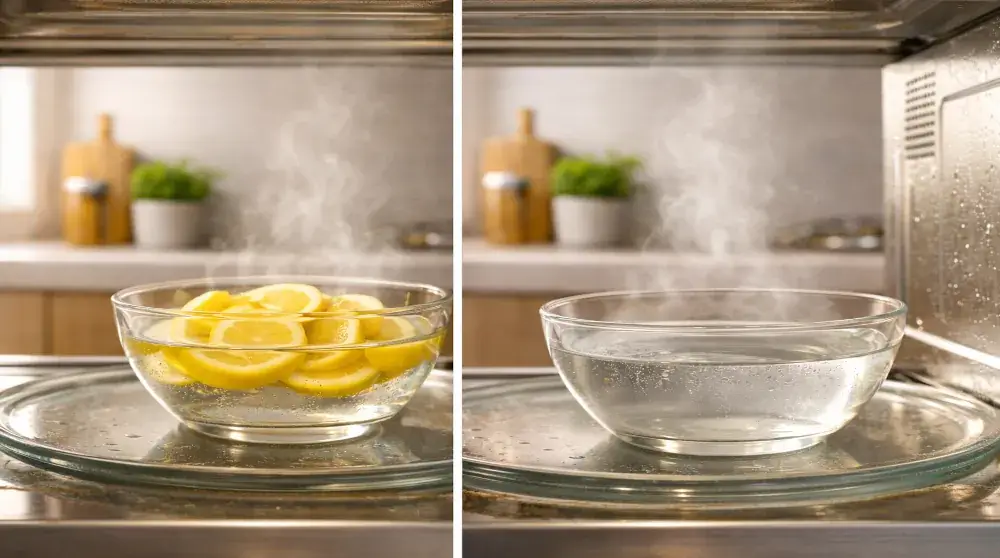
When it comes to cleaning a microwave naturally, two ingredients dominate almost every recommendation: lemon and vinegar. Both are affordable, chemical-free, and widely available. But while they’re often mentioned together, they don’t work in exactly the same way.
If you’ve ever wondered whether lemon or vinegar is actually better for microwave cleaning, the answer depends on what problem you’re trying to solve—grease, stains, or stubborn odors.
This guide breaks down lemon vs vinegar for microwave cleaning in a clear, practical comparison. You’ll learn how each works, when to use one over the other, and which option fits your kitchen routine best.
Why Lemon and Vinegar Are Popular Natural Microwave Cleaners
Both lemon and vinegar rely on steam and acidity to clean a microwave without chemicals.
When heated with water, they produce steam that loosens dried food splatters and grease. Their acidic properties help break down residue that plain water alone can’t handle.
What makes them different is how strong they are, how they smell, and how they interact with lingering odors.
How Lemon Cleans a Microwave
Lemon works through a combination of steam and citric acid.
How Lemon Steam Works
As lemon heats, steam spreads moisture throughout the microwave while citric acid cuts through grease. This softens dried-on food so it wipes away easily with minimal effort.
Strengths of Lemon Cleaning
Lemon is especially effective for:
- Light to moderate grease
- Everyday food splatters
- Freshening the microwave interior
It also leaves behind a clean, citrus scent that most people find pleasant.
Limitations of Lemon
While lemon is excellent for general cleaning, it may struggle with:
- Heavy burnt-on residue
- Extremely strong food odors (such as burnt popcorn or fish)
In those cases, lemon may need to be repeated or paired with an odor-absorbing follow-up like baking soda.
For a full walkthrough, see How to Clean Microwave with Lemon (Fast, Natural & Effective Method).
How Vinegar Cleans a Microwave
Vinegar relies on acetic acid, which is stronger than citric acid.
How Vinegar Steam Works
When heated, vinegar steam penetrates grease and neutralizes odor-causing compounds. Its acidity breaks down residue more aggressively than lemon.
Strengths of Vinegar Cleaning
Vinegar works best for:
- Heavy grease buildup
- Burnt food smells
- Strong lingering odors
It is particularly effective when odors persist even after wiping the microwave clean.
Limitations of Vinegar
The main downside of vinegar is its smell. While it fades after drying, some people find it unpleasant during cleaning.
Vinegar can also feel too harsh for frequent use if the microwave is already relatively clean.
Lemon vs Vinegar: Side-by-Side Comparison
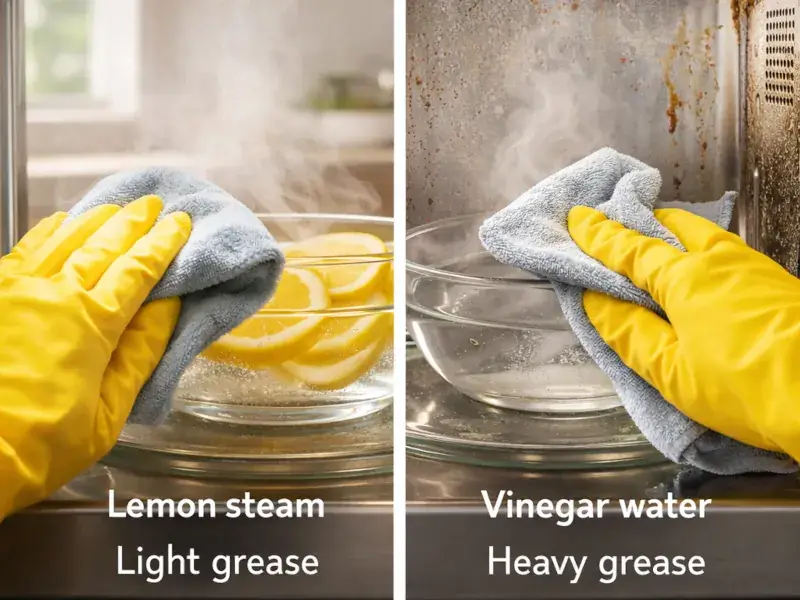
Here’s how lemon and vinegar compare in real-world use.
Cleaning Power
Vinegar generally has stronger degreasing and deodorizing power. Lemon is effective for routine cleaning but less aggressive overall.
Odor Control
Vinegar neutralizes strong odors more thoroughly. Lemon replaces odors with a fresh citrus scent, which works well for mild smells.
Smell During Cleaning
Lemon smells fresh and pleasant while cleaning. Vinegar smells sharp and acidic but dissipates after drying.
Frequency of Use
Lemon is better for regular maintenance cleaning. Vinegar is better for occasional deep cleaning or odor problems.
Family and Comfort Factor
For households sensitive to strong smells, lemon is often preferred. Vinegar is still safe but less comfortable for frequent use.
When to Choose Lemon Over Vinegar
Choose lemon if:
- Your microwave is lightly to moderately dirty
- You want fast, easy cleaning
- Odors are mild
- You clean regularly
- You prefer a pleasant scent
Lemon is ideal for weekly or biweekly maintenance.
When to Choose Vinegar Over Lemon
Choose vinegar if:
- Odors are strong or burnt
- Grease buildup is heavy
- Lemon cleaning hasn’t fully worked
- You need deeper deodorizing
Vinegar works best as a problem-solving tool rather than a daily cleaner.
Can You Use Lemon and Vinegar Together?
It’s best not to mix lemon and vinegar at the same time.
When combined, they don’t enhance cleaning power and can create unnecessary acidity. Instead, use them in sequence if needed.
For example:
- Steam clean with vinegar to remove odors
- Follow with lemon later for freshness
This approach avoids redundancy while maximizing effectiveness.
Which Is Safer for Microwave Surfaces?
Both lemon and vinegar are safe when used properly.
The key is moderation:
- Avoid prolonged soaking
- Don’t scrub aggressively
- Always wipe and dry thoroughly
For long-term care, alternating methods prevents overexposure to acidity.
Best Method Based on Your Situation
If your microwave:
- Looks dirty but doesn’t smell → Lemon
- Smells bad but looks clean → Vinegar
- Has burnt residue and odor → Vinegar first, lemon later
- Is cleaned regularly → Lemon as main method
Common Mistakes When Choosing Between Lemon and Vinegar
One mistake is assuming stronger is always better. Overusing vinegar for light messes can be unnecessary.
Another mistake is masking odors with lemon when residue hasn’t been fully removed. In those cases, vinegar is the better first step.
Understanding the goal of your cleaning session leads to better results.
Related Microwave Cleaning Guides
These guides help you choose the right method for every situation.
- How to Clean Microwave with Lemon (Fast, Natural & Effective Method)
- How to Clean Microwave Without Chemicals (Safe Natural Methods)
- How to Remove Microwave Odor Naturally
- Microwave Cleaning Mistakes to Avoid
Final Verdict: Lemon vs Vinegar for Microwave Cleaning
Neither lemon nor vinegar is “better” in every situation.
Lemon is ideal for regular cleaning, light grease, and keeping the microwave fresh. Vinegar is the stronger option for stubborn grease and serious odor problems.
Used correctly—and at the right time—both belong in a natural microwave cleaning routine.
Choose the method based on the problem, not habit, and your microwave will stay cleaner with less effort.