
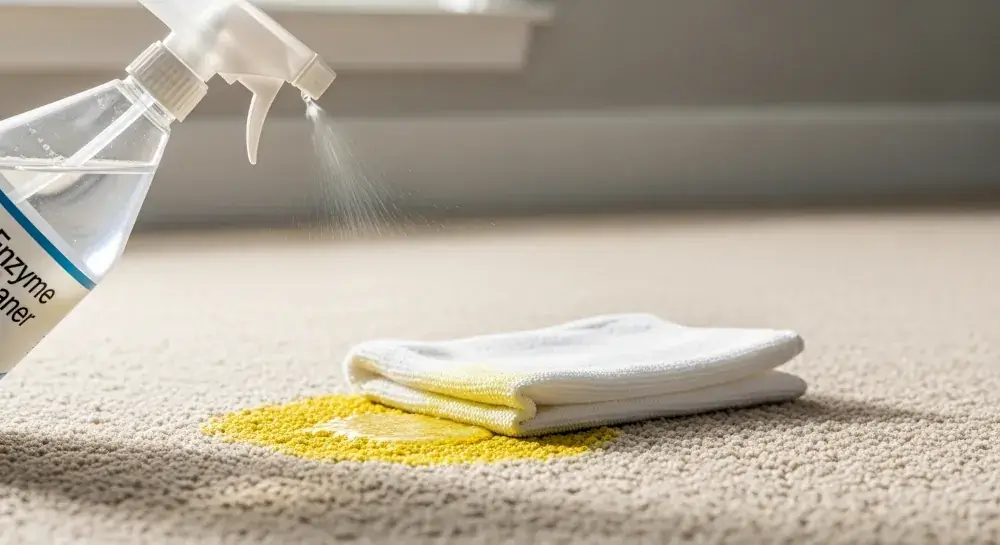
Living with pets brings joy, companionship, and sometimes unexpected messes. Whether it’s a puppy accident on the carpet, a cat vomiting on the sofa, or lingering pet odor that reappears every time humidity rises, pet stains can be uniquely challenging to remove. Pet accidents are not just ordinary stains — they are a mix of protein, bacteria, ammonia, and organic compounds that require special treatment.
When my own dog was a puppy, he chose my living room rug as his “favorite spot” during training. Even after multiple cleanings, the odor kept returning every time the weather changed. Only after learning about enzyme cleaners and proper deep-cleaning methods did the stain and the smell finally disappear.
This guide walks you through the most effective, science-backed methods for removing pet stains and odors from carpets, upholstery, hard floors, and bedding. These methods work for fresh accidents, old stains, and deeply embedded odors.
For more stain solutions, explore👉 Stain Removal Encyclopedia.
Why Pet Stains Are Hard to Remove
Urine Contains Urea, Uric Acid, and Ammonia
Pet urine is chemically different from human urine. When it dries, urine forms uric acid crystals that bond strongly to surfaces. These crystals reactivate with moisture, causing odors to return long after you’ve cleaned the surface. Regular cleaners cannot dissolve these crystals — only enzyme cleaners can.
Odor Reactivates When Humidity Rises
Many pet owners notice that the smell seems to come back days or weeks later. This happens because dried urine crystals absorb moisture from the air and release ammonia odor again. A surface may look clean while the deeper layers still contain odor-causing compounds.
Pets Re-mark the Same Spot
Animals have a strong sense of smell. If even a faint trace of odor remains, pets often return to the same spot and repeat the behavior. Removing the odor signature completely is essential for preventing repeat accidents.
First Aid for Fresh Pet Stains
Blot Immediately (Do Not Rub)
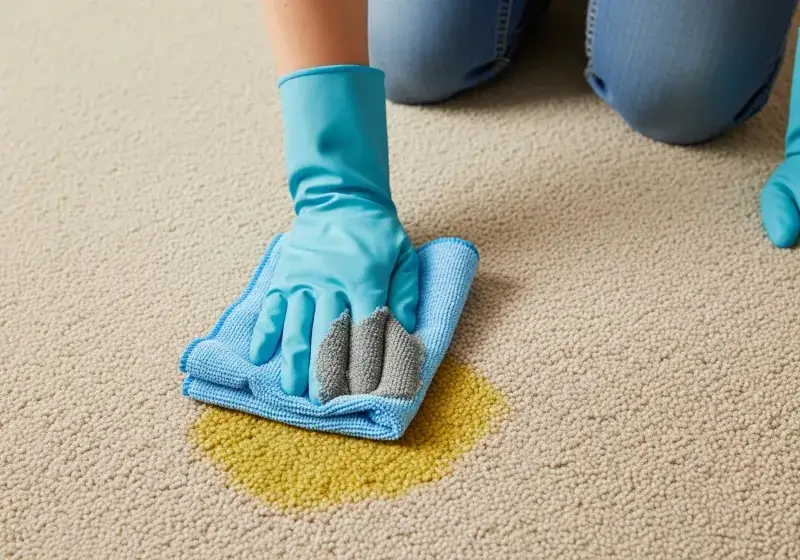
Use paper towels or a microfiber cloth to blot the area gently. Press firmly to absorb as much liquid as possible. Rubbing spreads the stain and pushes urine deeper into carpet padding or upholstery foam.
Neutralize Surface Moisture
After blotting, sprinkle baking soda or place fresh dry towels on top to pull out remaining moisture. Allow it to sit for several minutes before vacuuming or removing.
Keep the Area Cool
Do not use hot water or steam. Heat accelerates chemical bonding in protein stains and makes odors more stubborn. Stick to cold or room-temperature cleaning solutions.
Best Methods to Remove Pet Stains
Method 1 — Enzyme Cleaner (Most Effective for Urine & Odor)
Enzyme cleaners break down uric acid crystals, proteins, and ammonia compounds at a molecular level. This is the only reliable method for long-term odor removal.
Steps:
- Blot as much liquid as possible.
- Saturate the area generously with enzyme cleaner.
- Allow it to soak deeply (10–15 minutes for surface stains, several hours for older stains).
- Blot again and allow the area to air-dry.
- Repeat for strong or long-standing stains.
Method 2 — Vinegar and Water Solution
Vinegar neutralizes ammonia odor and helps loosen dried urine crystals. It does not fully remove uric acid but supports the cleaning process.
Steps:
- Mix 1 part vinegar with 2 parts water.
- Spray generously onto the stain.
- Blot with a clean cloth.
- Follow with enzyme cleaner for complete removal.
Method 3 — Baking Soda Deodorizing
Baking soda absorbs odor and moisture, making it a useful finishing step.
Steps:
- Sprinkle baking soda over the damp area.
- Let sit for several hours or overnight.
- Vacuum thoroughly.
Method 4 — Hydrogen Peroxide Mix (For Light Fabrics Only)
Hydrogen peroxide helps lift yellowing and disinfects mild bacteria. Use cautiously on colored fabrics.
Steps:
- Mix peroxide with a few drops of dish soap.
- Apply lightly to the stained area.
- Blot gently.
- Rinse carefully and follow with enzyme cleaner if needed.
Method 5 — Dish Soap and Cold Water
Ideal for vomit or fecal stains that contain grease and food particles.
Steps:
- Mix one teaspoon dish soap with cold water.
- Blot onto the stain using a cloth.
- Rinse with a damp cloth.
- Apply enzyme cleaner afterward for full odor removal.
Removing Pet Stains by Surface Type
Carpet (Fresh and Old Stains)
Carpet is the most difficult surface because urine soaks into fibers and carpet padding.
Steps for fresh stains:
- Blot thoroughly.
- Apply enzyme cleaner until the carpet is fully saturated.
- Allow the solution to reach the carpet pad.
- Let sit for several hours.
- Blot and air-dry.
For old, dried stains:
- Rehydrate the area with water.
- Apply a large amount of enzyme cleaner.
- Cover with plastic wrap to prevent drying.
- Allow to sit overnight.
- Blot and repeat if odor persists.
Avoid using steam cleaners.
Steam heat binds urine crystals permanently and worsens the smell.
Upholstery and Sofas
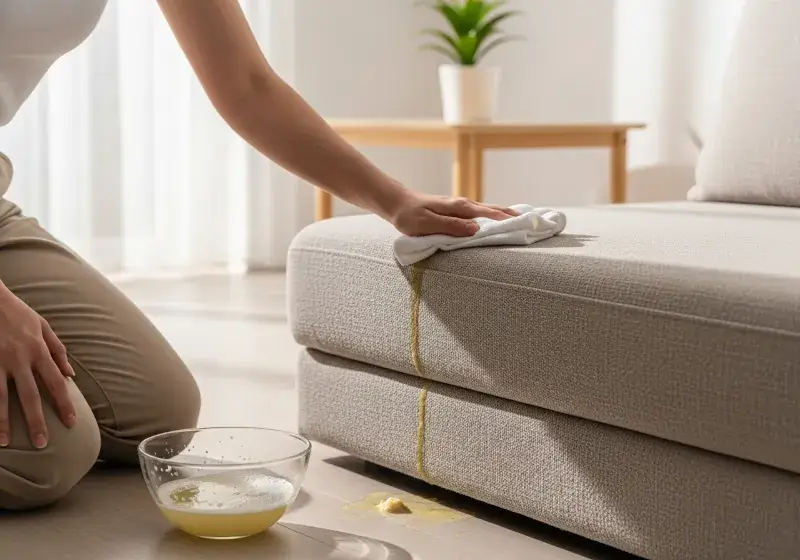
Upholstery absorbs stains quickly, so minimal liquid is key.
Steps:
- Blot up moisture with microfiber cloth.
- Mix a small amount of dish soap with water.
- Blot gently to lift surface residue.
- Apply enzyme cleaner lightly and let sit.
- Blot out excess liquid and allow to dry.
Hard Floors (Tile, Laminate, Vinyl)
Urine can seep into seams and grout lines.
Steps:
- Clean surface with mild detergent.
- Apply enzyme cleaner to the affected area.
- Let sit for the recommended time.
- Wipe and rinse.
Avoid bleach on laminate flooring, as it may damage the coating.
Mattresses and Pet Beds
Mattresses absorb liquid deeply, so cleaning must be thorough.
Steps:
- Blot out as much as possible.
- Apply enzyme cleaner generously.
- Allow it to soak for several hours.
- Blot and air-dry in sunlight if possible.
- Repeat if any odor remains.
Special Situations
Old Urine Stains (Yellowing and Strong Odor)
Older stains may require multiple rounds of enzyme treatment because crystals accumulate over time.
Approach:
- rehydrate stain
- soak deeply with enzyme cleaner
- allow extended drying time
- repeat as needed
Vomit Stains (Food + Bile + Acid)
Vomit can damage fabric because of its acidity.
Steps:
- Remove solid matter.
- Blot with cold water.
- Apply dish soap mixture.
- Follow with enzyme cleaner to eliminate odor.
Solid Waste Stains
Solid waste can leave both odor and discoloration.
Steps:
- Lift solids carefully without smearing.
- Blot the area with mild detergent solution.
- Apply enzyme cleaner to remove lingering bacteria and odor.
Marking Behavior or Repeat Spots
If your pet repeatedly marks the same location, residual odor is almost always the cause. Complete odor elimination is required to break the habit.
Pet Odor Removal Guide
Why Odor Remains Even After Cleaning
Urine crystals remain active beneath the surface. Even if you clean the top layer, deeper layers may continue releasing odor.
Deep Enzyme Saturation Method
To eliminate stubborn smells in carpets or cushions, saturate the area fully until enzyme cleaner penetrates every layer touched by urine.
Baking Soda Overnight Treatment
Sprinkle a thick layer of baking soda on dried stains and let sit overnight. Vacuum thoroughly the next day.
Sun-Drying Method
Sunlight naturally deodorizes and kills odor-causing bacteria. If the stained item is removable, allow it to dry outdoors for best results.
Best Products for Pet Stains and Odor
Enzyme Cleaners (Primary Solution)
These are essential for urine stains and should be in every pet owner’s cleaning kit.
Odor-Neutralizing Sprays (Non-Fragrance)
Look for products labeled “odor neutralizing,” not “fragrance cover.” These break down odor molecules instead of masking them.
Carpet-Safe Stain Removers
Good for spot treatment on fibers without damaging carpet backing.
Blacklight Detector (Optional but Useful)
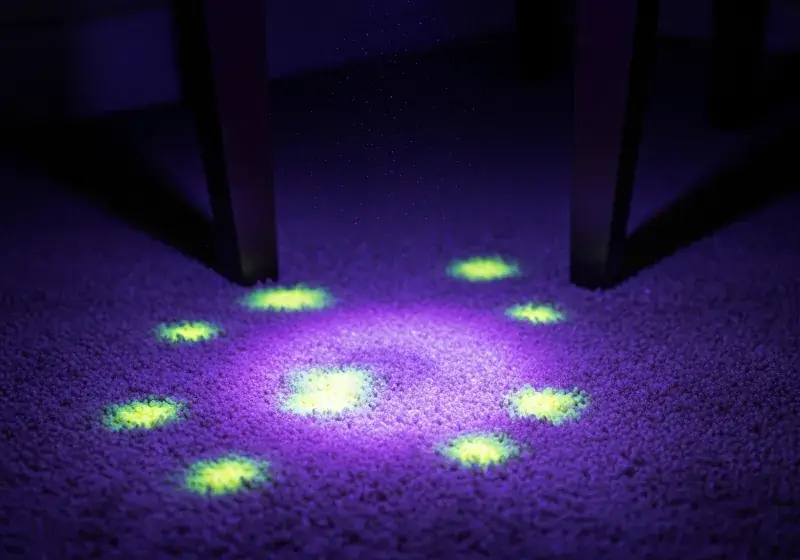
Urine glows under UV light. A blacklight can help identify old or hidden stains on carpets and walls.
Common Mistakes to Avoid
Using Steam Cleaner on Urine Stains
Heat sets ammonia crystals deeper into the carpet and worsens long-term odor.
Using Only Fragrance Sprays
Scents cover odor temporarily but do not remove the source. Pets will still smell previous accidents.
Scrubbing Wet Stains
This forces liquid deeper into fibers and spreads the stain.
When to Call a Professional
Urine Deep Into Carpet Padding
Professional extraction is necessary when urine reaches the padding or subfloor.
Expensive Upholstery or Memory Foam
These materials absorb liquid deeply and can warp or stain permanently without proper tools.
Frequently Asked Questions
Why does pet urine smell return after cleaning?
Because dried urine crystals rehydrate with humidity, releasing ammonia odor.
Do enzyme cleaners really work?
Yes — they break down the organic compounds in urine and eliminate odor at the molecular level.
Can baking soda remove pet odor?
It helps deodorize but cannot dissolve urine crystals on its own. Use baking soda after enzyme cleaning.
Is vinegar enough to remove urine smell?
Vinegar reduces odor but does not fully break down uric acid crystals. Use it only as a complementary step.
Can pet stains be removed from mattresses?
Yes, but stains often require deep enzyme saturation and repeated treatments.
Why do pets return to the same spot?
Residual odor signals the pet that it is a designated elimination area. Complete odor removal is necessary.
Final Thoughts
Pet accidents are a normal part of life with animals, but stains and odors don’t have to be permanent. With enzyme cleaners, correct blotting techniques, and proper odor neutralization, you can restore carpets, upholstery, and hard floors to their clean, fresh condition.
Explore more stain solutions:
👉 How to Remove Chocolate Stains
👉 How to Remove Grass Stains
👉 Stain Removal Encyclopedia (Main Guide)