
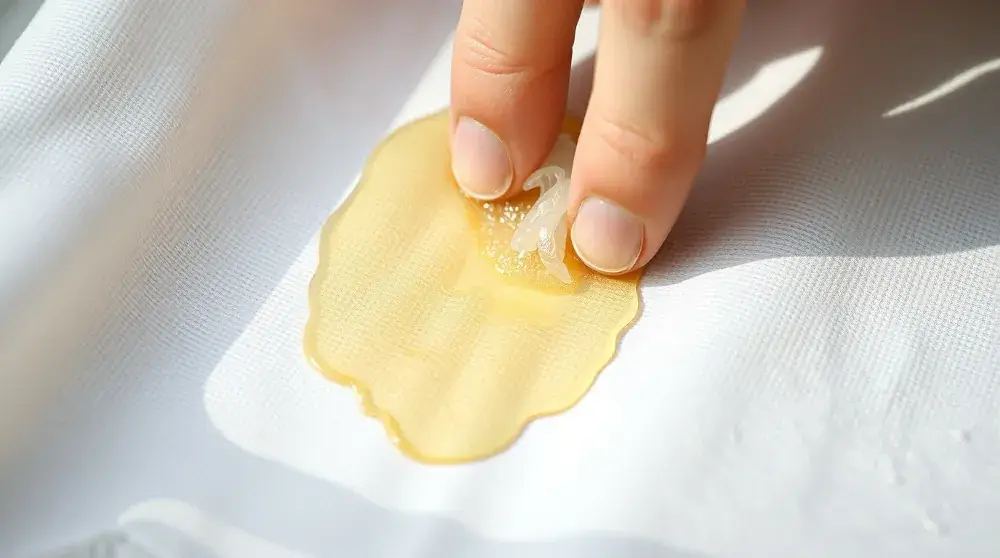
Grease and oil stains are some of the most deceptive stains you’ll ever deal with. They often look light or harmless at first — a tiny splash of cooking oil, a drop of foundation on your shirt collar, butter dripping from breakfast, or even a smudge of motor oil on your jeans. But behind that small mark is a stain that spreads quickly, seeps deep into fibers, and becomes more visible after washing if not treated correctly.
The reason is simple: oil doesn’t dissolve in water, so the moment you add water without pre-treatment, the stain spreads instead of lifting. Many people make this exact mistake — rinsing too soon, scrubbing too hard, or throwing the item straight into the washing machine — and end up setting the stain even deeper.
The good news? With the right approach, even old grease stains can be removed. This guide walks you through exactly how to treat all types of oil stains safely and effectively: cooking oil, butter, salad dressing, oily makeup, sunscreen, motor oil, and more.
For a complete encyclopedia of stain removal, also explore➡️ Stain Removal Encyclopedia
Let’s start by understanding why grease stains behave the way they do.
Why Grease & Oil Stains Are Hard to Remove
Oil Doesn’t Dissolve in Water
Water and oil naturally repel each other — meaning rinsing fresh oil with plain water often makes the stain worse. Instead of washing away, the oils spread across the fibers and seep deeper, creating a larger translucent stain.
Grease Spreads Into Fabric Fibers
Grease molecules have a “creeping” effect: they migrate outward as they sit. This is why even a tiny droplet of cooking oil can become a large dark circle on clothing. The longer grease sits, the harder it becomes to lift completely.
Some Oils Contain Dye or Protein
Not all oils are the same:
- Butter & ghee contain fats + protein.
- Makeup oils contain pigments that cling to fabric.
- Motor oil contains dark petroleum compounds that stain heavily.
This means oil stains sometimes need more than one type of treatment.
First Aid for Fresh Grease Stains
Step 1 — Blot or Scrape Excess Oil
Before you apply any cleaner, remove as much surface oil as possible. Use a clean cloth, paper towel, or dull knife to lift away solids or absorb droplets. Avoid pushing downward — lift upward instead.
Step 2 — Apply an Absorbent (Baking Soda, Cornstarch, or Baby Powder)
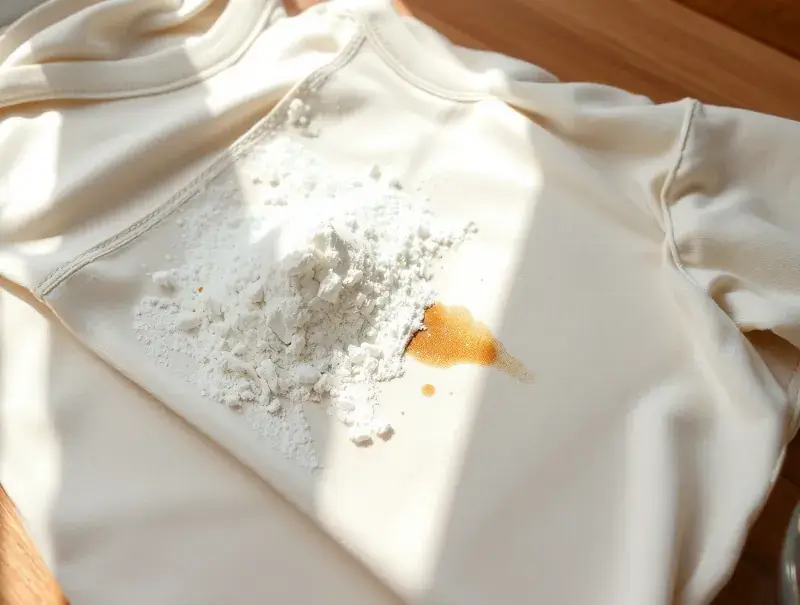
Absorbents are essential for fresh stains. Spread a thick layer over the stain and let it sit for 10–15 minutes. You’ll often see the powder turn slightly yellow or clumpy as it absorbs the oil.
Then brush it off gently. If the stain is still shiny or wet, repeat the step.
Step 3 — DO NOT USE WATER YET
This is where most stain-removal attempts go wrong. Water cannot break down oils, so using it too early spreads the stain further and creates deeper penetration.
Keep the fabric dry until you begin the degreasing step.
Step-by-Step Methods to Remove Grease & Oil Stains
Method 1 — Dish Soap (The Most Effective Degreaser)
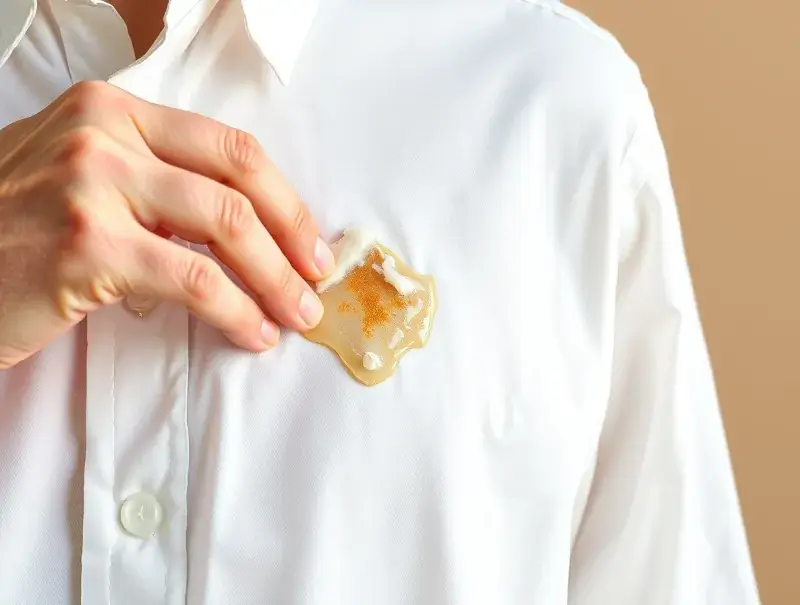
Dish soap is designed to cut through kitchen grease — meaning it works perfectly on fabric oils too.
How to use:
- Apply a few drops directly to the stain.
- Gently massage into the fabric using your fingers or a soft brush.
- Let sit for 10–15 minutes.
- Rinse with warm water (not hot).
- Repeat as needed, then launder normally.
Dish soap breaks down oil molecules so they can be washed away.
This method works for:
- Cooking oil
- Butter
- Sunscreen
- Makeup
- Salad dressing
Method 2 — Baking Soda or Cornstarch (Absorbent Method)
This method works especially well for thick fabrics or stains that have spread.
How to use:
- Apply a thick layer of powder.
- Let sit for 15–30 minutes.
- Brush off.
- Follow with dish soap to remove remaining oil.
Baking soda is also useful for oily carpet stains.
Method 3 — Hot Water Flush (For Durable Fabrics Only)
Heat helps loosen grease — but only if the fabric can tolerate it (like cotton, jeans, towels).
How to use:
- Boil water and let it cool slightly.
- Hold the fabric tight over a sink.
- Pour the hot water from about 1 foot above.
- Pre-treat with dish soap and wash.
Avoid on delicate fabrics like silk, wool, or synthetics that react to heat.
Method 4 — Rubbing Alcohol for Makeup & Cosmetic Oils
Makeup stains — especially foundation and sunscreen — contain pigments that need solvents.
How to use:
- Dab rubbing alcohol onto the stain using a cotton pad.
- Lift pigment gently.
- Follow with dish soap to remove remaining oil.
- Rinse and wash as normal.
Alcohol dissolves cosmetic oils better than soap alone.
Method 5 — Heavy-Duty Laundry Detergent (For Old Stains)
Old grease stains often darken after washing. Heavy-duty detergents help break down set-in oils.
How to use:
- Apply detergent directly to stain.
- Scrub lightly with soft brush.
- Let sit 20 minutes.
- Launder on warm cycle if fabric allows.
Oxygen-based detergent boosters can help brighten white fabrics.
Method 6 — WD-40 for Extremely Stubborn Stains
WD-40 can break down old petroleum-based stains — but use carefully.
How to use:
- Spray a small amount on stain (test first!).
- Let sit 5 minutes.
- Apply dish soap immediately to remove WD-40 residue.
- Rinse and wash thoroughly.
Avoid on delicate fabrics or items with sentimental value.
How to Remove Grease Stains by Material
Cotton & Polyester Clothing
Most cotton and polyester garments handle oil removal well.
Best method:
- Dish soap
- Warm water rinse
- Repeat pre-treatment if needed
Polyester may require more soaking because oil bonds tightly to synthetic fibers.
Silk, Wool & Delicate Fabrics
Delicate fabrics absorb oil quickly and react poorly to strong scrubbing.
Recommended approach:
- Use cornstarch or baby powder to absorb oils
- Avoid dish soap unless very diluted
- Blot gently instead of rubbing
- Consider professional cleaning for valuable items
Silk especially can watermark, so avoid saturating with liquid.
Jeans & Thick Fabrics
Denim is durable and handles aggressive treatment well.
Steps:
- Dish soap pre-treatment
- Hot water flush
- Brush agitation
- Enzyme detergent wash
Grease often hides in the weave of denim, so repeat treatment may be needed.
Upholstery & Sofas
Because upholstery cannot be submerged, treat carefully.
Steps:
- Blot oil fully.
- Cover with baking soda; wait 20 minutes.
- Vacuum the powder.
- Apply a small amount of dish-soap solution.
- Blot with clean water.
- Dry with fan to prevent water rings.
Avoid saturating the fabric — moisture can create mildew or stains.
Carpets & Rugs
Carpet fibers trap oil deeply, so patience is key.
Steps:
- Apply baking soda or cornstarch.
- Vacuum thoroughly.
- Dab with dish soap solution.
- Blot — do NOT scrub.
- Repeat until stain lightens.
White towels prevent dye transfer during blotting.
Special Scenarios
Removing Motor Oil from Clothes
Motor oil is thick, dark, and petroleum-based.
Best approach:
- Pre-treat with WD-40
- Follow with dish soap
- Use hot water (if fabric-safe)
- Wash with heavy-duty detergent
You may need multiple rounds for full removal.
Oil-Based Makeup Stains
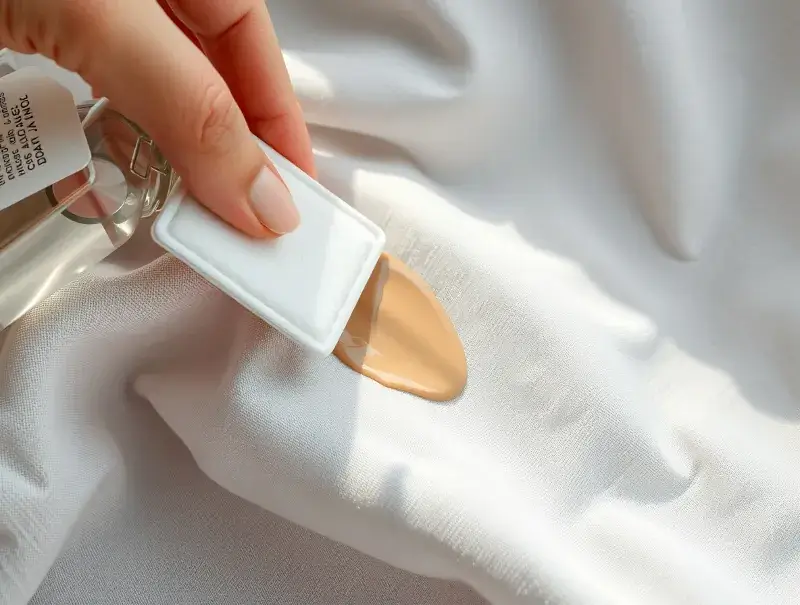
Foundation, concealer, and cream blush often leave yellowish marks.
Best approach:
- Blot excess
- Dab rubbing alcohol
- Apply dish soap
- Rinse and wash
Avoid scrubbing foundation stains — it spreads the pigment.
Grease from Cooking (Frying Oil, Butter, Ghee)
Cooking grease contains both fats and proteins.
Steps:
- Blot + absorbent powder
- Dish soap pre-treatment
- Rinse warm
- Wash using enzyme detergent
Butter stains may need extra time because milk proteins bind to fibers.
Old & Set-In Grease Stains
Old grease stains darken and become sticky.
Treatment:
- Apply heavy-duty detergent
- Let sit 15–30 minutes
- Add oxygen bleach if fabric-safe
- Wash warm
- Air dry before checking
If heat-dried previously, the stain may require WD-40 first.
Common Mistakes People Make
Using Plain Water First
Water cannot dissolve oil — it spreads it. Always pre-treat dry.
Scrubbing Aggressively
Scrubbing pushes stains deeper into fabric and damages fibers.
Using Bleach on Grease
Bleach does nothing to oil — and may turn the stain yellow.
Putting Clothes in the Dryer Too Early
Dryer heat “sets” grease permanently.
Always air dry until the stain is fully gone.
When to Call a Professional Cleaner
Expensive Silk, Wool, or Suede
Solvents may discolor delicate fibers. Better to use a specialized cleaner.
Deep Oil Stains in Carpet Padding
If oil has seeped past carpet fibers, steam extraction is needed.
Large-Scale Sofa or Mattress Spills
Improper DIY cleaning can leave water rings or mold.
Frequently Asked Questions
Why does my grease stain reappear after washing?
This happens when some oil remains deep in the fibers. It becomes invisible when wet but returns once dry. Repeat pre-treatment before machine drying.
Can hot water remove grease stains?
Hot water helps but only after pre-treatment with dish soap. Using heat too early spreads the oil and may cause permanent staining.
Is baking soda always necessary?
Not always, but it’s excellent for fresh stains and upholstery where water exposure is risky. For clothing, dish soap alone can often work.
How do I remove the dark shadow left behind?
This is residual absorbed oil. Reapply dish soap and let sit longer. For old stains, add oxygen bleach (fabric-safe).
Can I use vinegar for oil stains?
Vinegar is not a degreaser. It helps for odor and some dyes but is ineffective alone on oil-based stains.
Final Thoughts
Grease and oil stains may seem intimidating, but once you understand how they behave, they become surprisingly manageable. With the right combination of blotting, absorbent powders, degreasers, and proper washing techniques, you can remove even the most stubborn stains — from cooking accidents to oily makeup to automotive grease.
For more stain removal help, explore:
➡️ How to Remove Beverage Stains
➡️ How to Remove Ink & Marker Stains
➡️ How to Remove Blood Stains
➡️ Stain Removal Encyclopedia
With the right method and a little patience, no oil stain needs to be permanent.