
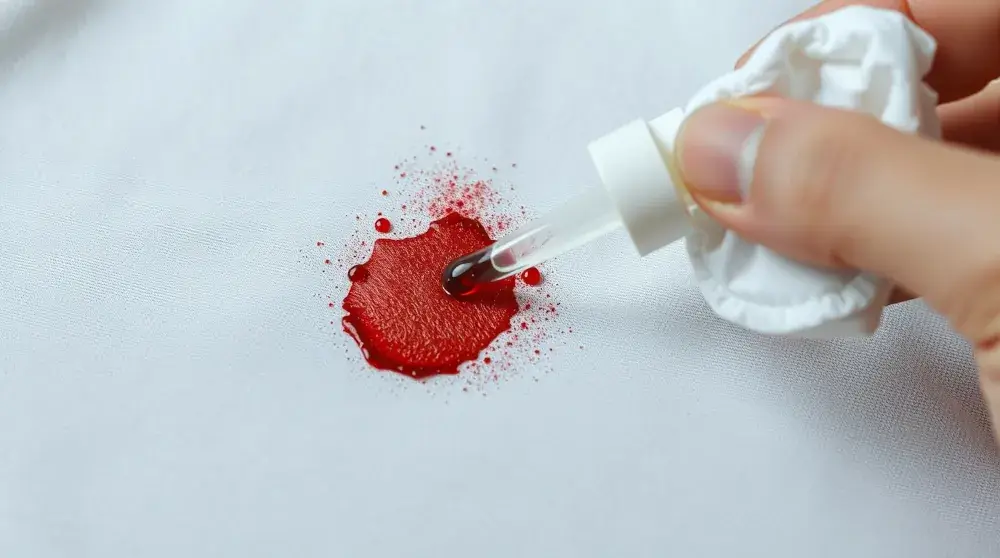
Blood stains can feel alarming when they happen — not just because of the stain itself, but because they often appear at the most inconvenient moments. Maybe you cut your finger while cooking and didn’t notice the drip onto your shirt. Maybe your child had a sudden nosebleed at night, leaving stains on the pillowcase. Or maybe menstrual blood stained your favorite sheets.
Whatever the situation, one thing is true for all blood stains:
They’re much easier to remove when you know the science behind them.
Blood is a protein-based stain, which means treating it incorrectly — especially using hot water — can make the stain permanent. But with the right steps, both fresh and dried blood stains can be removed completely from clothing, bedding, mattresses, carpets, and upholstery.
For a complete library of stain solutions, see➡️ Stain Removal Encyclopedia
Now let’s break down how blood stains work and how to treat them safely.
Why Blood Stains Are Difficult to Remove
Blood Contains Protein
Blood is composed of proteins that solidify when exposed to heat. Just like cooking an egg, heat causes proteins to “set,” making the stain cling firmly to fabric fibers. This is why hot water is the biggest mistake in blood stain removal.
Iron in Blood Creates Deep Pigmentation
Hemoglobin contains iron compounds that give blood its strong red-brown color. These pigments bind easily to porous materials like cotton, mattress foam, and carpet fibers.
Dried Blood Behaves Differently From Fresh Blood
Fresh blood dissolves quickly in cold water, while dried blood oxidizes and becomes tougher. Dried stains need rehydration and enzyme treatment to break down proteins.
First Aid for Fresh Blood Stains
Step 1 — Rinse With Cold Water Only
Cold water helps dissolve blood before it sets. Place the stained fabric under running cold water and let the flow push the blood out from behind the stain. Hot or warm water will lock the stain in permanently.
Step 2 — Blot, Don’t Rub
Rubbing spreads the stain and forces blood deeper into the fibers. Instead, blot gently with a clean cloth or paper towel to lift the stain upward.
Step 3 — Keep It Moist if You Can’t Treat It Yet
If you’re in a rush, dampen the stain with cold water or place a damp cloth on top. A moist stain is always easier to remove than a dry one.
Best Methods to Remove Blood Stains
Method 1 — Cold Water Rinse + Gentle Scrubbing
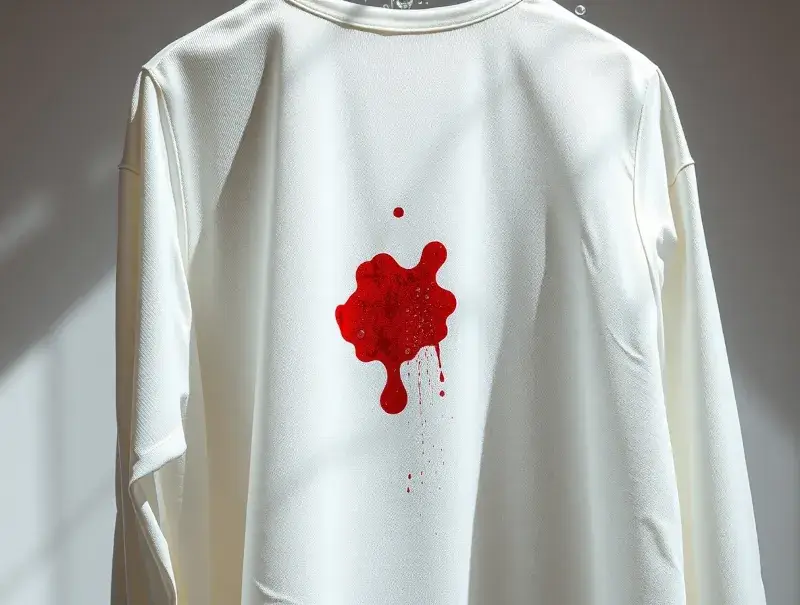
For fresh stains, this simple method often works surprisingly well.
How to do it:
- Rinse under cold water.
- Use your fingers or a soft brush to gently work the stain.
- Apply a tiny amount of mild soap if needed.
The key is gentleness — the more you scrub, the deeper blood penetrates.
Method 2 — Salt Paste (Great for Fresh Blood)
Salt helps draw out moisture from the stain and can lighten fresh discoloration.
How to use:
- Mix salt with a small amount of cold water to create paste.
- Spread over stain.
- Let sit 20–30 minutes.
- Rinse with cold water.
Salt isn’t strong enough for old stains but is helpful in emergencies.
Method 3 — Hydrogen Peroxide (For Whites Only)
Hydrogen peroxide is one of the best blood removers — but only for white or very light-colored fabrics.
How to use:
- Test on a hidden area first.
- Pour a small amount onto stain.
- Bubbling reaction means peroxide is breaking down blood proteins.
- Blot and rinse.
- Repeat if needed.
Never use peroxide on dark fabrics — it may bleach or fade colors.
Method 4 — Enzyme-Based Detergent
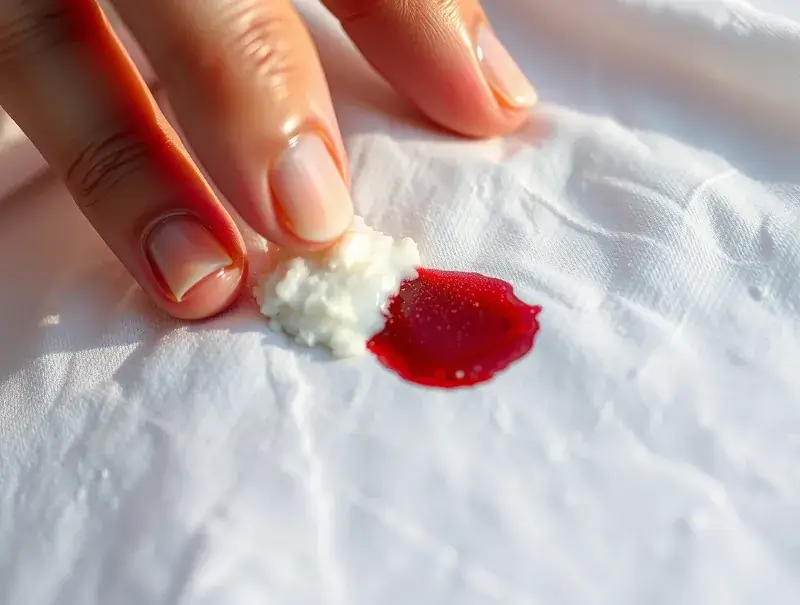
Enzymes break down proteins, making them essential for dried or stubborn stains.
How to use:
- Apply enzyme detergent directly to stain.
- Let sit for 15–30 minutes.
- Rinse with cold water.
- Wash normally.
This method is especially good for menstrual blood and dried stains.
Method 5 — Baking Soda Soak
Gentle, natural solution for blood on sheets, shirts, or kids’ clothing.
Instructions:
- Mix 1 tablespoon baking soda with 2 cups cold water.
- Soak stained area for 30–60 minutes.
- Blot and rinse.
Method 6 — Ammonia (For Stubborn Old Stains Only)
Ammonia is strong and should be used carefully.
How to use:
- Mix 1 tablespoon ammonia with 1 cup cold water.
- Dab lightly with cloth.
- Rinse thoroughly.
⚠️ Avoid ammonia on wool, silk, or dark fabrics.
Method 7 — Aspirin Paste
Great for small or fresh stains.
How to use:
- Crush 2 aspirin tablets.
- Mix with water to form paste.
- Apply, let sit 30 minutes.
- Rinse cold.
Removing Blood Stains by Material
Cotton & Everyday Clothing
Cotton absorbs blood quickly, but it also releases stains well.
Best method:
- Cold rinse
- Enzyme detergent
- Gentle scrubbing
- Machine wash in cold water
Repeat before drying — heat will set remaining stain.
White Fabrics
White clothes, sheets, and towels are easiest to treat.
Best options:
- Hydrogen peroxide
- Oxygen bleach
- Enzyme pre-soak
Avoid chlorine bleach; it can turn stains yellow.
Dark-Colored Clothing
Use mild solutions to avoid fading.
Recommended:
- Enzyme detergent
- Baking soda soak
- Gentle cold-water rinse
Avoid peroxide.
Bedding & Pillowcases
Menstrual or nosebleed stains are common here.
Steps:
- Rinse sheets under cold water.
- Pre-treat with enzyme detergent.
- Soak 30 minutes.
- Machine wash cold.
To avoid spreading stains inside the washing machine, rinse thoroughly first.
Mattress
Mattresses require spot-cleaning since they cannot be submerged.
How to clean:
- Blot as much as possible with cold, damp cloth.
- Spray lightly with hydrogen peroxide (safe for white/light fabrics).
- Blot again until stain lifts.
- Sprinkle baking soda to absorb moisture.
- Let dry completely.
Avoid using too much liquid — it can soak deep into the foam.
Carpets & Rugs
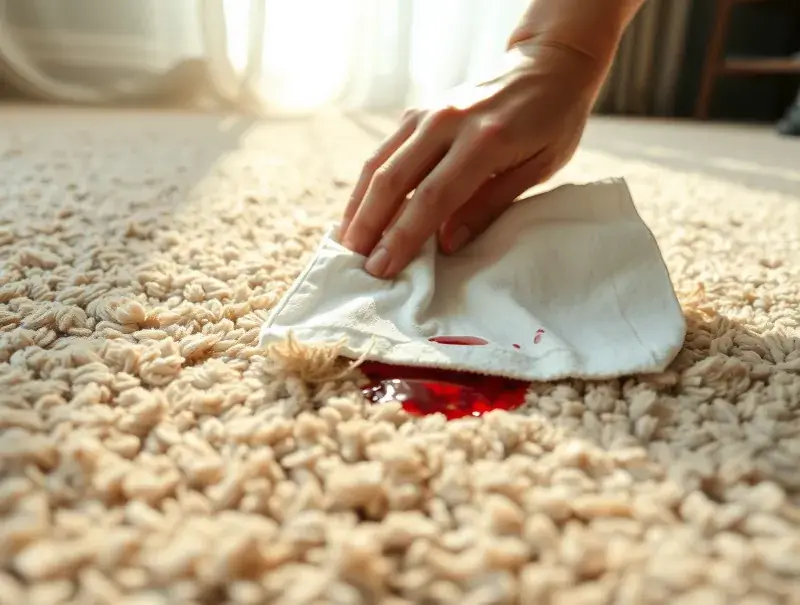
Carpet fibers hold on to blood tightly, especially if dried.
Steps:
- Blot with cold water.
- Apply enzyme cleaner or mild soap.
- Blot again — never rub.
- Rinse lightly.
- Repeat as needed.
Dark carpets may require extra enzyme treatment.
Upholstery & Sofas
Upholstery stains need gentle, minimal-moisture techniques.
Method:
- Blot stain gently.
- Apply enzyme cleaner with a cloth (never pour directly).
- Blot repeatedly until stain fades.
- Rinse lightly.
- Dry with fan to avoid water rings.
Special Scenarios
Dried Blood on Clothing
Dried stains require rehydration.
Steps:
- Soak fabric in cold water for 30 minutes.
- Apply enzyme detergent.
- Gently scrub.
- Wash cold.
Hydrogen peroxide may help on white garments.
Menstrual Blood Stains on Sheets
This type of stain lifts best with enzymes.
Method:
- Rinse cold.
- Apply enzyme detergent.
- Pre-soak 30 minutes.
- Wash on cold cycle.
If still visible, repeat before drying.
Blood Stains on Towels
Towels are thick, so blood settles deep.
Solution:
- Hydrogen peroxide (for white towels)
- Enzyme detergent soak
- Multiple repetitions
Pet Blood Stains
Pet blood differs slightly in composition but is treated similarly.
Best method:
- Enzyme cleaner
- Cold rinse
- Blotting, not rubbing
Common Mistakes to Avoid
Using Hot Water
Hot water cooks protein and sets blood stains instantly. Always start with cold.
Scrubbing Too Hard
Scrubbing spreads the stain and damages fibers. Use gentle motions only.
Using Bleach Incorrectly
Chlorine bleach reacts with protein and can create yellow stains — worse than the original.
Putting Clothes in the Dryer Too Soon
Dryer heat permanently locks in any remaining stain. Air-dry until you’re sure the stain is gone.
When to Call a Professional
Blood on Wool, Silk, or Delicate Fabrics
These materials react unpredictably to DIY methods. Professional dry cleaners have specialized solvents.
Large Blood Stains on a Mattress
If blood seeps deep into the foam interior, you may need professional extraction.
Old, Oxidized Stains on Carpets
Deep-set brown stains in carpet padding cannot be fully removed without steam extraction and enzyme treatment.
Frequently Asked Questions
Why does peroxide bubble on blood?
Because hydrogen peroxide reacts with the enzyme catalase in blood. The bubbles help break down proteins and lift stain particles.
Can dried blood stains really be removed?
Yes, but they require rehydration and enzyme treatment. Multiple rounds may be needed for deeply oxidized stains.
Is salt safe for all fabrics?
Salt is gentle but not very strong. Avoid using salt on delicate fabrics like silk.
Can menstrual blood stains be fully removed?
Yes — enzyme detergents are highly effective. Avoid hot water, which causes permanent setting.
Why didn’t my stain disappear after washing?
Because heat or detergent alone can’t break down protein stains. Pre-treatment is essential.
Is vinegar good for blood stains?
Vinegar helps with odor and mild lifting, but it’s not as effective as enzyme cleaners.
Final Thoughts
Blood stains can feel intimidating, but once you understand how they work — and what not to do — they become surprisingly manageable. The key is simple: cold water, gentle blotting, and the right stain remover for the fabric.
Whether it’s fresh blood on clothing, menstrual stains on sheets, or dried stains on a mattress or carpet, you can restore your fabric with patience and the right approach.
For more stain-removal help, explore these guides:
➡️ How to Remove Grease & Oil Stains
➡️ How to Remove Ink & Marker Stains
➡️ Stain Removal Encyclopedia
With the right technique, even tough blood stains can be completely erased.