
Your kitchen countertops are the hardest-working surfaces in your home. They handle daily food prep, grocery bags, coffee spills, crumbs, oily splatters, knife scratches, sticky sauces, and everything in between. Because countertops are used constantly, they can get dirty far faster than most people realize. But here’s the tricky part: not all countertops can be cleaned the same way.
Granite reacts to acids. Marble scratches easily. Quartz hates harsh chemicals. Wood absorbs stains. Laminate burns. Stainless steel streaks. Each material needs a different cleaning method — and using the wrong cleaner can cause permanent dullness, etching, discoloration, or even surface damage.
This guide shows you exactly how to clean kitchen countertops correctly based on the material you have, using methods that are safe, streak-free, and practical for everyday use. Whether your counters are quartz, granite, laminate, wood, marble, tile, or stainless steel, you’ll find the right method here.
If you want a full kitchen care system (sink, oven, fridge, microwave, cabinets), explore ➡️ Kitchen Cleaning Master Guide. Let’s get your counters spotless and shining again.
Why Cleaning Countertops Correctly Matters
Different Materials Need Different Cleaners
Every countertop responds differently to cleaners. Vinegar, which is safe for laminate, can destroy granite sealant and dull the finish permanently. Baking soda, which works great on quartz, is too abrasive for certain stones. Cleaning safely means protecting both appearance and longevity.
Food Safety & Hygiene
Countertops are where you chop vegetables, prepare raw meat, mix ingredients, and assemble meals. Grease, bacteria, and cross-contamination can hide in tiny pores or small scratches. Cleaning properly ensures your kitchen stays safe and hygienic.
Maintaining Shine & Longevity
Countertops are a major investment. Proper cleaning prevents dullness, stains, etching, discoloration, and long-term wear. With the right care, a countertop can stay beautiful for decades.
General Daily Cleaning Routine (For All Countertops)
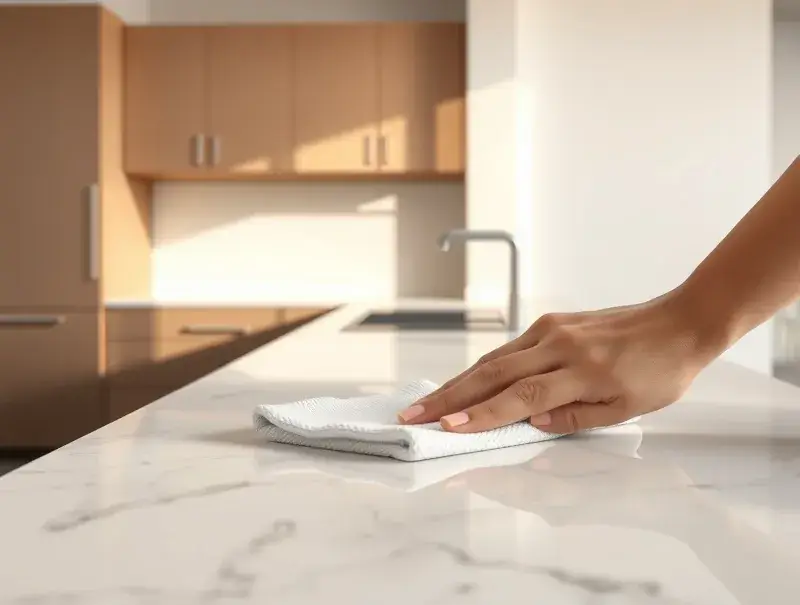
Remove Crumbs & Debris First
Before wiping, remove crumbs with a dry cloth or small brush. This prevents small particles from scratching the surface — especially important for natural stone and stainless steel.
Clean With Mild Soap + Warm Water
A few drops of dish soap mixed with warm water is the safest everyday cleaner for all countertop materials. It removes grease, food residue, and most dirt without damaging the surface.
Dry With Microfiber Cloth
Water spots and streaks often appear when counters air-dry. Using a microfiber cloth leaves a smooth, streak-free finish and prevents mineral deposits.
How to Clean Quartz Countertops
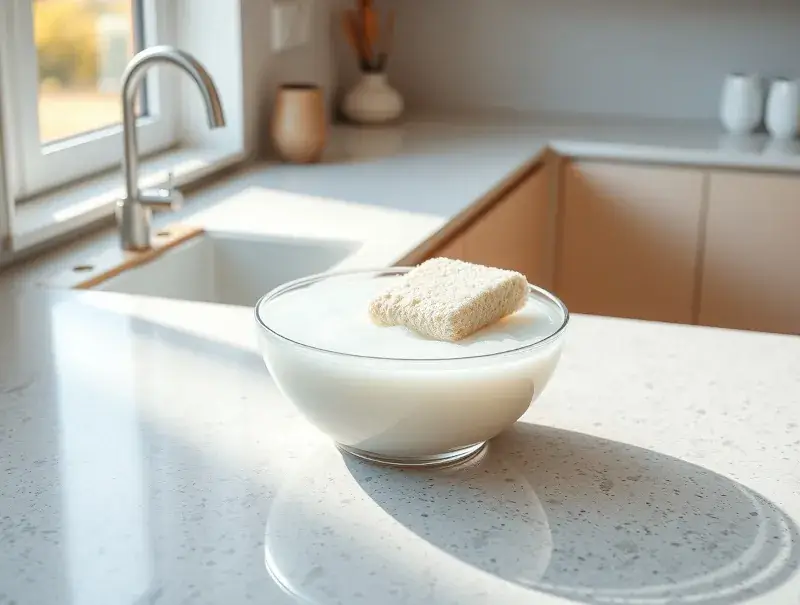
Daily Cleaning — Soap + Warm Water
Quartz is non-porous, which makes it easy to clean. Use a soft cloth and warm soapy water for daily maintenance. This keeps grease and fingerprints away.
Remove Stains With Baking Soda Paste
For stubborn stains (coffee, turmeric, food dye), mix baking soda with water to create a paste. Apply to the stain for 2–3 minutes, then wipe gently. Quartz is durable, so this method is safe.
What to Avoid: Vinegar, Bleach, Harsh Chemicals
Harsh cleaners can damage the resin that holds quartz together. Avoid vinegar, bleach, oven cleaner, degreaser sprays, or anything labeled “acidic.” These can cause dullness or surface erosion.
If your kitchen includes stainless steel appliances nearby, check the guide here➡️ How to Clean Stainless Steel Sink & Appliances
How to Clean Granite Countertops
Use pH-Neutral Cleaner or Soap Water
Granite must be cleaned with pH-neutral cleaners. Dish soap + warm water is perfect. Spray and wipe gently, following the natural pattern of the stone.
Weekly Shine Using Microfiber Polish
Every 1–2 weeks, use a granite-safe polish to enhance the glossy finish. Microfiber cloths help maintain shine without leaving streaks.
Avoid: Vinegar, Citrus, Ammonia (Very Important)
Any acidic cleaner (including lemon) can break down granite’s sealant. This leaves dull patches that are hard to repair. Always avoid acidic cleaners on granite.
How to Clean Marble Countertops
Gentle Soap Only — Never Acidic Cleaners
Marble is the most sensitive countertop material. Acids like lemon, vinegar, and harsh chemicals can cause permanent etching. Use only gentle soap and warm water for daily cleaning.
Remove Oil Marks With Cornstarch
Cornstarch is excellent for absorbing oils trapped inside marble pores. Sprinkle on the stain, leave for 10–20 minutes, then wipe clean.
Use Marble-Safe Cleaner for Tough Stains
If the stain persists, use a commercial marble-safe cleaner designed specifically for calcium-based stone.
How to Clean Laminate Countertops
Soap Water & Vinegar Mix (Safe)
Laminate is very easy to clean and not sensitive to acidity. You can use dish soap, vinegar-water spray, or all-purpose cleaners.
Baking Soda for Scuff Marks
For black marks or scuffs, sprinkle baking soda and scrub gently with a damp sponge. Do not scrub heavily at the edges.
Avoid Abrasive Scrubbers on Edges
Laminate edges can peel or chip if scrubbed aggressively. Use only soft cloths or non-scratch sponges.
How to Clean Butcher Block / Wood Countertops
Daily Cleaning With Soap + Damp Cloth
Use a soft sponge and dish soap. Avoid soaking the wood — excess water can warp or stain wood grain.
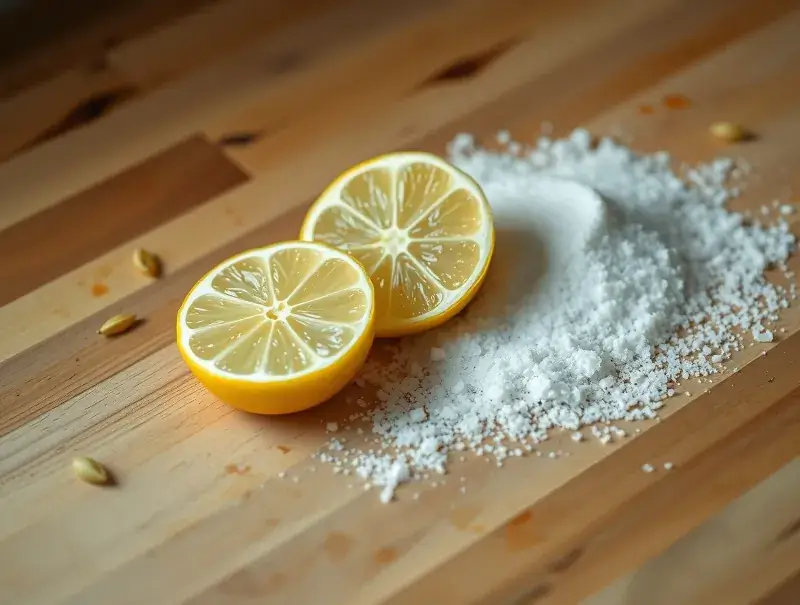
Deep Clean Using Lemon + Salt Scrub
Sprinkle coarse salt on the surface and scrub with half a lemon. The lemon disinfects naturally while the salt removes stains and odors. Rinse lightly and dry immediately.
Oil Treatment Monthly
Wood countertops should be treated monthly with food-safe mineral oil. This hydrates the wood, prevents cracking, and protects against stains. If your wood cabinets also need cleaning, see➡️ How to Degrease Kitchen Cabinets
How to Clean Tile Countertops
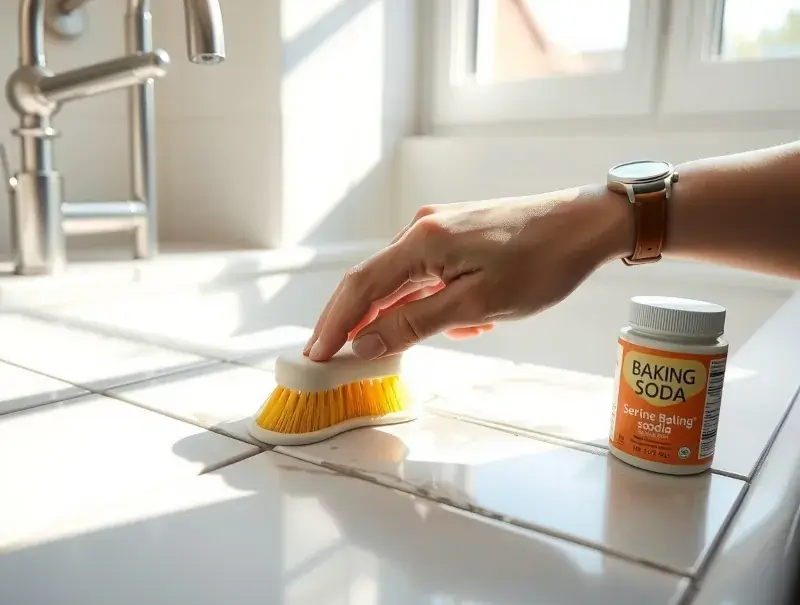
Surface Cleaning With Soap Water
Tile is durable and easy to maintain. Soap water or all-purpose cleaner works great for daily cleaning.
Clean Grout Lines With Baking Soda Paste
Grout collects food and moisture easily. Use baking soda paste with a toothbrush to scrub between tiles. Rinse thoroughly afterward.
Optional: Seal the Grout Every 6 Months
Sealing grout prevents dirt buildup, mold, and discoloration — especially in busy kitchens.
How to Clean Stainless Steel Countertops
Remove Grease With Soap Water
Stainless steel shows fingerprints and grease quickly. Wipe with warm soapy water to remove surface oils.
Vinegar for Streak-Free Shine
Vinegar cuts through grease and evaporates quickly, leaving a smooth, streak-free finish. Spray lightly and wipe with microfiber.
Polish With a Drop of Oil
Use olive oil or mineral oil to polish the surface. Apply a small drop on a microfiber cloth and rub along the grain. This creates a glossy, fingerprint-resistant coating. For full stainless steel care, read➡️ How to Clean Stainless Steel Sink & Appliances
Special Cleaning Situations
Removing Coffee & Tea Stains
Make a baking soda paste and scrub gently. This works on quartz, laminate, tile, and stainless steel. Avoid using it on marble unless extremely gentle.
Removing Grease Near Stove Area
Grease splatters onto surrounding counters, especially laminate and tile. Use a mild degreaser that is safe for your surface material.
Disinfecting Safely Without Damaging Surface
Instead of using bleach:
- Quartz: use alcohol-based spray
- Granite/Marble: use stone-safe disinfectants
- Laminate: use vinegar spray or alcohol wipes
Mistakes to Avoid on Any Countertop
Using Abrasive Scrubbers
Abrasive pads cause scratches, dull finish, and permanent marks. Microfiber or soft sponges are best.
Leaving Water Standing Too Long
Water creates mineral stains on almost all surfaces. Always dry after cleaning.
Using Vinegar on Stone Countertops
Vinegar is safe for laminate and stainless steel but extremely damaging to marble, granite, and quartzite.
How to Protect & Maintain Countertops Long-Term
Always Use Cutting Boards
Cutting directly on countertops causes scratches and damages protective coating. Cutting boards also prevent bacteria transfer.
Use Trivets for Hot Pans
Never place hot pots or pans directly on quartz or laminate — they can burn or melt. Granite and marble can crack from thermal shock.
Clean Up Spills Immediately
Acidic spills like lemon, tomato, wine, and vinegar must be wiped immediately on stone surfaces to prevent etching.
Frequently Asked Questions
What is the safest cleaner for all countertops?
Mild dish soap and warm water work for every countertop type. For everyday use, it’s the safest universal cleaner.
Can vinegar damage stone countertops?
Yes. Vinegar can etch marble, weaken granite sealant, and dull quartz resin. Use pH-neutral cleaners instead.
How do you remove oil stains from granite?
Use a granite-safe poultice or paste designed for lifting oil from porous stone.
What’s the best way to clean quartz daily?
Soap + warm water and microfiber cloth. No polishing needed.
How often should wood countertops be oiled?
Once a month for best hydration and protection.
What causes dull spots on marble?
Acid etching from lemon, vinegar, or harsh cleaners. Marble must be cleaned only with gentle soap.
Final Thoughts — Your Counters, Just Like New
Your countertops deserve the right kind of care, and when cleaned correctly, they can stay beautiful for decades. Whether yours are quartz, granite, laminate, wood, marble, tile, or stainless steel, following the right cleaning method ensures they remain hygienic, durable, and shining every day. Build a simple routine, use the right cleaners, and treat each material gently — your kitchen will look fresher and more inviting instantly.
For more kitchen cleaning tips, explore:
➡️ Kitchen Cleaning Master Guide
➡️ Oven Cleaning Hacks
➡️ How to Clean Microwave with Lemon
➡️ Stainless Steel Sink & Appliances Guide