
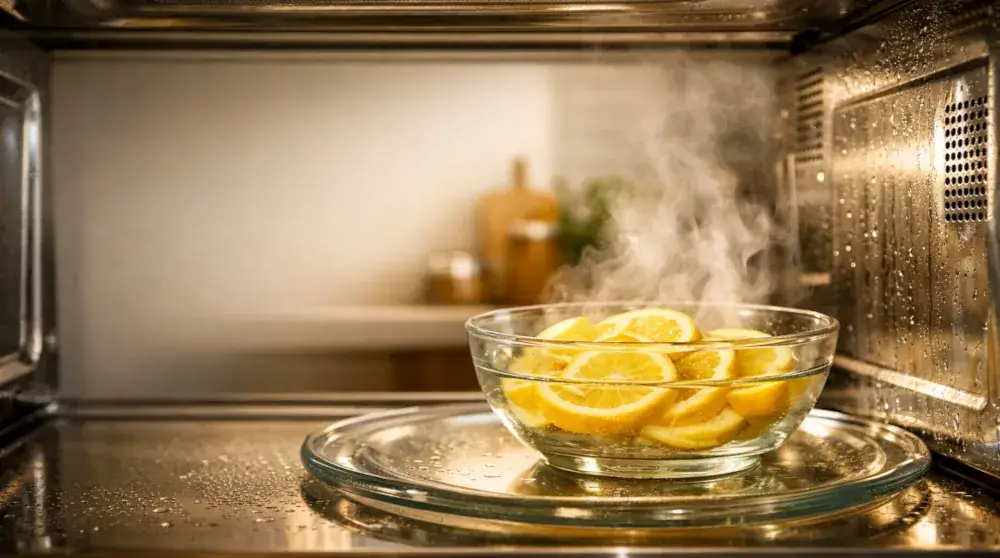
A dirty microwave is almost impossible to avoid. Food splatters, grease, and lingering odors build up faster than we realize—especially if you use it daily. The problem is, many people hesitate to clean their microwave properly because they don’t want harsh chemical residue near their food.
The good news? You don’t need chemical cleaners at all.
This guide will show you exactly how to clean a microwave without chemicals using safe, natural methods that actually work. These techniques are simple, affordable, and effective for everyday messes as well as stubborn buildup.
If you prefer fast results, lemon steam cleaning remains the most popular option. But this article covers all natural alternatives, so you can choose the method that fits your kitchen and cleaning style.
Why Avoid Chemical Cleaners in the Microwave?
Microwaves are food-contact appliances. Anything you spray inside can easily come into contact with food surfaces, steam, or condensation.
Many commercial microwave cleaners leave behind chemical residue, especially if not wiped thoroughly. In a closed space like a microwave, fumes can also linger longer than expected.
Natural cleaning methods reduce these risks while still breaking down grease and odors effectively. They’re also gentler on interior surfaces, door seals, and vents, which helps extend the life of your appliance.
For homes with kids, pets, or anyone sensitive to strong smells, chemical-free cleaning is simply the safer option.
Best Natural Ways to Clean a Microwave Without Chemicals
There isn’t just one way to clean a microwave naturally. Each method works best for different situations.
Lemon Steam Cleaning Method (Most Effective)
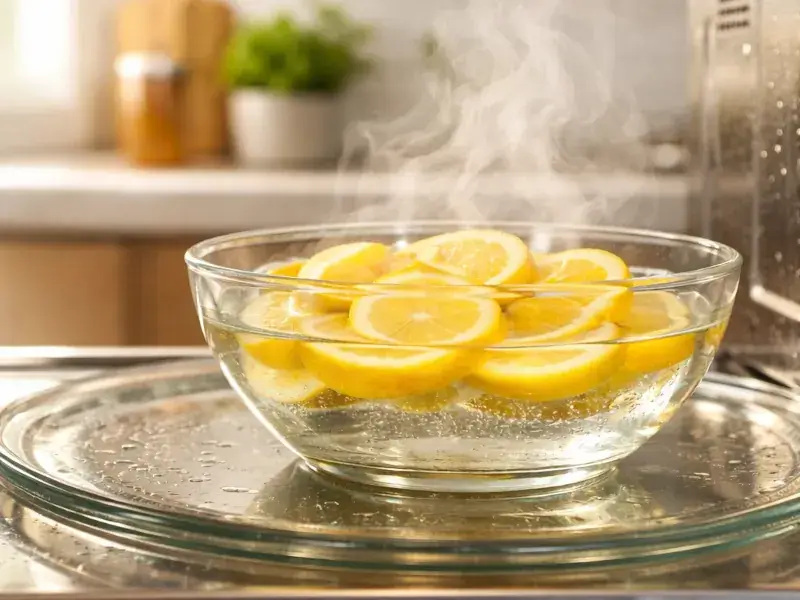
Lemon steam cleaning is widely considered the most effective natural microwave cleaner.
When heated, lemon releases citric acid and steam. Together, they soften dried food splatters and cut through grease, making it easy to wipe everything away.
This method is ideal for:
- Greasy buildup
- Strong food smells
- Quick deep cleaning
If you want a full step-by-step breakdown, see How to Clean Microwave with Lemon (Fast, Natural & Effective Method).
Vinegar and Water Method
Vinegar works well when grease is heavy or odors are strong.
The steam loosens grime, while vinegar’s acidity breaks down residue. However, vinegar has a sharp smell that some people dislike, even though it fades after drying.
Use this method if:
- Lemon is unavailable
- Odors are especially strong
- You don’t mind a brief vinegar smell
Avoid using vinegar too frequently, as repeated acidity may dull interior surfaces over time.
Baking Soda Paste for Stubborn Stains
For splatters that refuse to come off, baking soda is a gentle abrasive.
When mixed with water into a paste, it lifts dried-on food without scratching surfaces. This method works best for spot cleaning rather than full interior cleaning.
Ideal uses:
- Dried sauce splatters
- Sticky corners
- Turntable stains
Dish Soap and Warm Water (Light Cleaning)
For light messes, a few drops of mild dish soap in warm water are enough.
This method is best for:
- Daily or weekly maintenance
- Quick wipe-downs
- Fresh spills
Be careful not to use too much soap, as residue can cause streaks or odors if not rinsed properly.
Step-by-Step: How to Clean Microwave Without Chemicals
If you want a universal method that works with any natural cleaner, follow this simple process.
What You’ll Need
- Lemon, vinegar, or baking soda
- Microwave-safe bowl
- Water
- Microfiber cloth or soft sponge
Cleaning Steps
- Add water and your chosen natural cleaner to a microwave-safe bowl
- Heat until steam fills the interior
- Let the door stay closed for a few minutes
- Wipe the top, sides, and bottom gently
- Remove and wash the turntable separately
- Dry all surfaces completely
Steam is the key. It does most of the work so you don’t have to scrub aggressively.
How to Remove Microwave Odor Naturally
Odors often linger even after visible messes are gone. Natural deodorizing methods work by neutralizing smells instead of covering them up.
Lemon for a Fresh Citrus Scent
Lemon leaves a clean, light scent while breaking down odor-causing residue. It’s ideal for everyday food smells like reheated leftovers or popcorn.
Baking Soda for Neutralizing Odors
Baking soda absorbs odors instead of masking them. Leave a small open container inside the microwave overnight to neutralize lingering smells.
Vinegar for Strong Food Odors
For powerful smells like fish or burnt food, vinegar is the most effective option. Steam clean once, then wipe thoroughly and let the microwave air out.
Common Mistakes When Cleaning a Microwave Naturally
Even natural methods can fail if used incorrectly.
One common mistake is not letting the steam sit long enough. Rushing this step makes wiping much harder.
Another issue is scrubbing dry stains instead of softening them first. This can damage interior surfaces.
Avoid abrasive sponges, steel wool, or mixing baking soda and vinegar together. When combined, they cancel each other out and reduce effectiveness.
Also, don’t forget the door seals and vents. These areas trap grease and odors more than most people realize.
How Often Should You Clean Your Microwave?
Cleaning frequency depends on how often you use your microwave.
For daily use:
- Quick wipe once a week
- Steam clean every 1–2 weeks
For light use:
- Wipe as needed
- Steam clean once a month
Covering food and wiping spills immediately can dramatically reduce how often deep cleaning is needed.
Is Natural Microwave Cleaning Really Effective?
Yes—but expectations matter.
Natural cleaning works best when done regularly. Heavy buildup may require repeating the process once or twice. Steam loosens residue, but it won’t dissolve years of neglect in one pass.
That said, natural methods are more than enough for normal household use and are safer for long-term maintenance than harsh chemical sprays.
Related Microwave Cleaning Guides
This guide is the central resource for cleaning your microwave naturally without chemicals. Below, you’ll find related guides that go deeper into specific methods, odor removal tips, and step-by-step techniques.
- How to Clean Microwave with Lemon (Fast, Natural & Effective Method)
- How to Remove Microwave Odor Naturally
- Best Natural Microwave Cleaning Hacks
- Common Microwave Cleaning Mistakes
Final Takeaway
You don’t need chemical sprays to keep your microwave clean and fresh. With simple ingredients like lemon, baking soda, and warm water, you can remove grease, stains, and odors safely and effectively.
For the fastest results, lemon steam cleaning remains the top choice. For stubborn stains or strong smells, rotating natural methods works best.
Clean consistently, use steam wisely, and your microwave will stay fresh—without chemicals.