
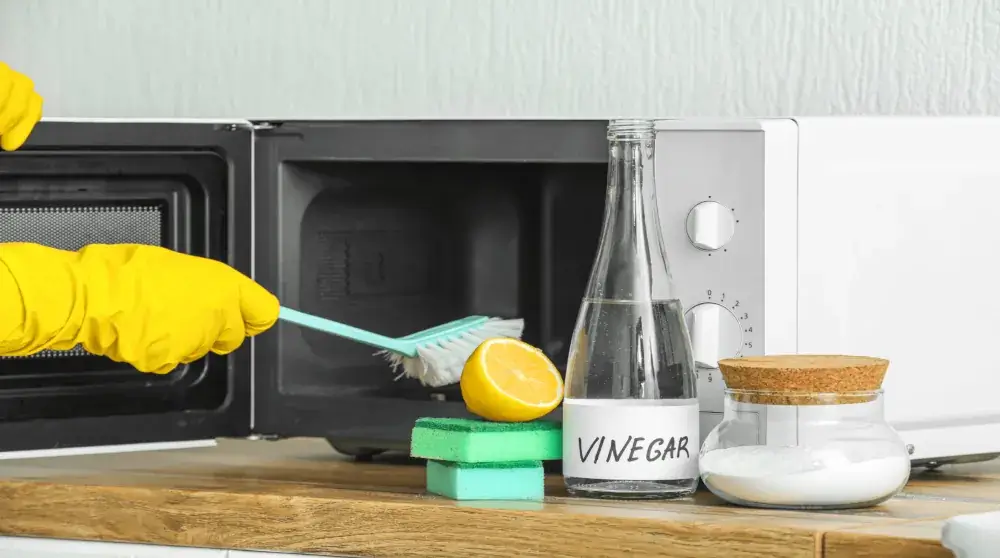
Keeping a microwave clean sounds simple—until stubborn stains, greasy buildup, and lingering odors refuse to go away. Many people end up using harsh chemical sprays just to get fast results, even though those products aren’t ideal around food.
The truth is, you don’t need chemicals at all.
With the right techniques, natural microwave cleaning hacks can remove grease, stains, and odors just as effectively—often with less effort and zero safety concerns. These hacks work by using steam, gentle acidity, and smart maintenance habits rather than aggressive scrubbing.
This guide rounds up the best natural microwave cleaning hacks in one place. Think of it as a practical toolkit you can return to whenever your microwave needs attention.
Why Natural Microwave Cleaning Works So Well
Microwaves are designed to handle heat and steam. Natural cleaning methods simply use those same conditions to your advantage.
Steam loosens dried food, moisture softens grease, and mild natural acids break down residue without damaging interior surfaces. When combined with proper timing and wiping technique, these methods outperform many commercial cleaners.
The key isn’t stronger ingredients—it’s using the right method at the right moment.
Hack #1: Lemon Steam for Fast, All-Purpose Cleaning
Lemon steam cleaning remains the most popular natural microwave hack—and for good reason.
Heating lemon slices or juice in water creates steam that softens dried food splatters while citric acid cuts through grease. The result is a microwave interior that wipes clean with minimal effort.
This hack works best for:
- Weekly or biweekly cleaning
- Light to moderate grease
- Fresh food splatters
- Keeping the microwave smelling fresh
For a full step-by-step guide, see How to Clean Microwave with Lemon (Fast, Natural & Effective Method).
Hack #2: Vinegar Steam for Strong Odors and Heavy Grease
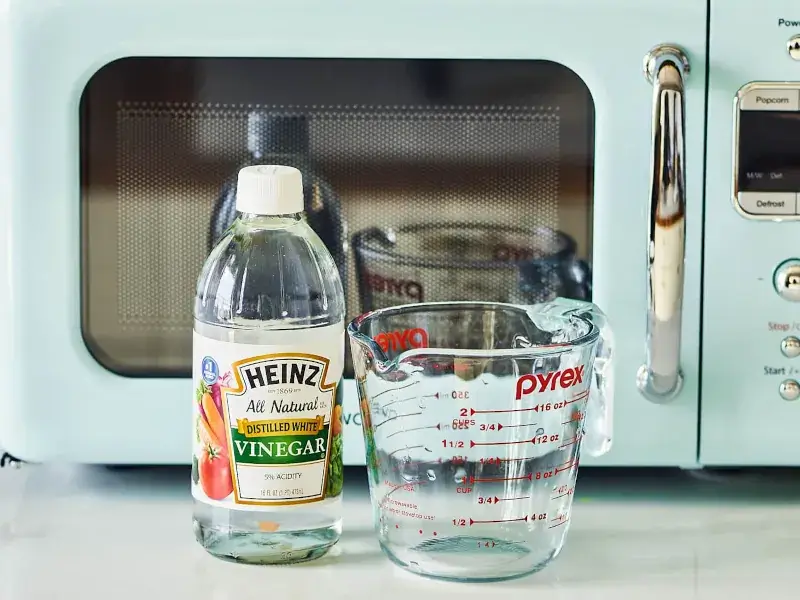
When odors are strong or grease is stubborn, vinegar is the better tool.
Vinegar steam penetrates odor-causing residue more aggressively than lemon. While the smell during cleaning is sharper, it fades once the microwave dries.
Use this hack when:
- Burnt popcorn smells linger
- Fish or spicy food odors won’t go away
- Lemon cleaning didn’t fully work
For a detailed comparison, see Lemon vs Vinegar for Microwave Cleaning: Which Works Better?.
Hack #3: Baking Soda for Odor Absorption
Baking soda doesn’t clean grease—but it excels at absorbing odors.
After steam cleaning, place an open bowl of baking soda inside the microwave overnight. It pulls lingering smells from interior surfaces and the air.
This hack works best as:
- A follow-up deodorizer
- An overnight odor fix
- A monthly freshness reset
For deeper odor solutions, see How to Remove Microwave Odor Naturally.
Hack #4: Coffee Grounds for Burnt Smell Recovery
Burnt smells can be stubborn and unpleasant. Dry coffee grounds absorb odors effectively and leave a mild, neutral scent behind.
Place a small bowl of dry coffee grounds inside the microwave overnight after cleaning. This hack is especially helpful after:
- Burnt food incidents
- Smoke-like odors
- Failed masking attempts
Hack #5: Let Steam Sit Longer (The Patience Hack)
One of the simplest hacks is also the most overlooked: patience.
Many people rush steam cleaning by opening the microwave door too soon. This reduces effectiveness and increases scrubbing.
The fix is simple:
- Heat the steam bowl
- Leave the door closed for 5 minutes
- Let condensation do the work
This single habit makes every natural method work better.
Hack #6: Clean the Door Seals and Corners
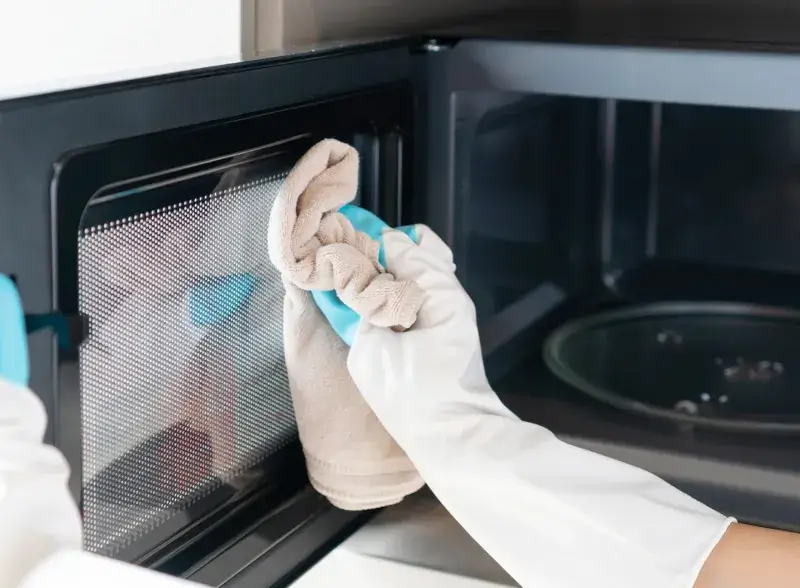
Most odors hide in places people forget to clean.
Door seals, corners, and vents trap grease and steam residue. Even if the interior walls look clean, these areas can hold smells.
After steaming:
- Wipe door seals gently
- Clean corners and edges
- Dry thoroughly
This hack alone solves many “mystery odor” problems.
Hack #7: Dry Everything Before Closing the Door
Moisture left behind creates odor-friendly conditions.
Always wipe the microwave dry after cleaning and leave the door open briefly. This allows moisture to evaporate fully and prevents smells from returning.
This applies to all cleaning methods, natural or not.
Hack #8: Use Lemon for Maintenance, Vinegar for Problems
Instead of choosing one method forever, rotate based on need.
- Lemon → regular maintenance
- Vinegar → problem-solving
- Baking soda → odor absorption
This balanced approach prevents buildup without overusing stronger methods.
Hack #9: Avoid Common Natural Cleaning Mistakes
Natural methods fail when used incorrectly.
Avoid:
- Mixing vinegar and baking soda together
- Scrubbing dry stains aggressively
- Using abrasive sponges
- Leaving liquid pooled inside
For a full breakdown, see Microwave Cleaning Mistakes to Avoid (That Make It Smell Worse).
Hack #10: Clean Consistently, Not Intensely
Natural cleaning works best when done regularly.
Instead of waiting until smells are strong:
- Wipe spills immediately
- Steam clean lightly every 1–2 weeks
- Deodorize monthly if needed
This keeps the microwave fresh with minimal effort.
How Often Should You Use These Hacks?
For most households:
- Light wipe: weekly
- Steam clean: every 1–2 weeks
- Deodorize: monthly or as needed
Heavy microwave use may require slightly more frequent care, but consistency matters more than frequency.
Are Natural Microwave Cleaning Hacks Safe?
Yes—when done properly.
Natural methods avoid harsh chemicals, reduce residue risk, and rely on materials already safe for food use. The key is dilution, moderation, and proper drying.
For safety-specific guidance, see Is Lemon Safe for Cleaning a Microwave? (What You Should Know).
Related Microwave Cleaning Guides
This article wraps up our complete natural microwave cleaning system. Use these guides for deeper, step-by-step solutions.
- How to Clean Microwave with Lemon (Fast, Natural & Effective Method)
- How to Clean Microwave Without Chemicals (Safe Natural Methods)
- How to Remove Microwave Odor Naturally
- Lemon vs Vinegar for Microwave Cleaning: Which Works Better?
- Microwave Cleaning Mistakes to Avoid
- Is Lemon Safe for Cleaning a Microwave?
Final Takeaway
Natural microwave cleaning isn’t about shortcuts—it’s about smarter habits.
With steam, patience, and the right natural ingredients, you can keep your microwave clean, odor-free, and safe without chemicals. Use lemon for routine care, vinegar for tougher problems, baking soda for deodorizing, and consistency to prevent buildup.
These simple hacks work because they respect how microwaves function—making cleaning easier, safer, and more effective in the long run.